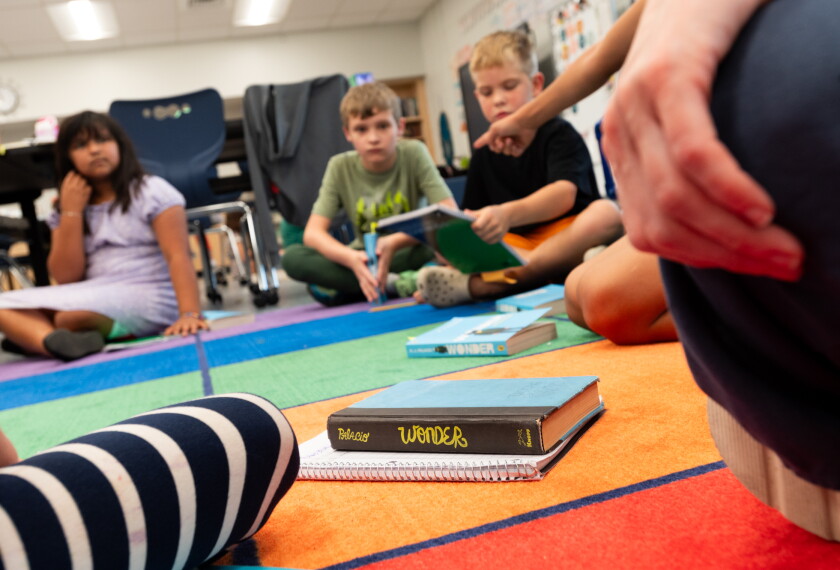
What’s the single most important activity a child can do during the summer related to learning?
Read for pleasure.
That was the response from a handful of K-12 teachers—1st grade classroom teachers, high school math teachers, and those in between—to this question posed by Education Week in a recent (unscientific) survey.
But science backs them up.
As early as the 1970’s, research concluded that reading was the only activity “strongly and consistently related to summer learning.” Fast forward to the early 2000s, and education researchers declared that a lack of access to books during summer break could translate to a two-month loss in reading achievement for children from low-income families.
The message, it seems, is clear: Kids should routinely spend time during the summer curled up on their bed or sprawled out on a favorite couch reading for pleasure. But herein lies the problem: Kids are reading for pleasure less than they have in decades. A survey by the National Assessment of Educational Progress that began in 1984 and was most recently conducted in late 2019 and early 2020 asked U.S. kids ages 9 and 13 whether they read for fun almost every day. In this most recent survey, 42 percent of 9-year-olds said they read almost daily for fun, compared to 53 percent in both 2012 and 1984. Only 17 percent of 13-year-olds said they read almost daily for fun, compared to 27 percent in 2012 and 35 percent in 1984.
This news comes as students’ performance on national reading assessments continues to drop.
This backward slide in kids’ pleasure reading, along with declining reading achievement and the seemingly unanimous agreement in the practice’s value over summer break, begs the question: How can educators help get kids to read more in the summer? Here’s what experts have to say.
Engage parents in the process
“Most parents are on board with the idea of kids reading during leisure time,” said Daniel T. Willingham, professor of cognitive psychology at the University of Virginia and author of Raising Kids Who Read: What Parents and Teachers Can Do (2015, Jossey-Bass). “They just don’t always know how to make it happen.”
Hosting a school-based workshop for parents can get the message out about effective strategies around pleasure reading, Willingham suggested. It can also present an opportunity to quell parents’ anxiety about their support role as it relates to summer reading, as reading experts advise that parents keep the focus on reading for pleasure and leave the academic piece to teachers. This delineation not only makes reading more appealing to kids (and likely to parents as well), but research has shown that kids whose parents encourage reading for pleasure develop into stronger readers than those whose parents associate reading with an academic skill.
Such workshops can also offer tips for parents, from general practical advice on making summer reading happen—like carving out a daily reading routine at home or even on the go (during car trips, for example)—to the more nuanced. For instance, if English isn’t the family’s first language, parents can encourage children to read books in their first language, Willingham suggested. And if a child struggles with fluency, audiobooks are an acceptable alternative.
Consider access
It may seem obvious, but it’s something that may be overlooked: Access to books during the summer is a key component to ensuring that kids read them. “When a school is out of session during the summer months ... the access to books can kind of disappear,” Deimosa Webber-Bey, director of information services and cultural insight at Scholastic, Inc., told Education Week. A recent biennial nationally representative survey by Scholastic revealed that 20 percent of children ages 17 and under aren’t reading any books at all over the summer, in part due to a lack of access.
It’s critical, then, that educators share with families (preferably before school closes for the summer) various ways to access books. This may include making families aware of local public libraries, many of which offer robust summer reading programs, or even providing books to students free of charge.
Use caution when instituting a rewards system
Whether or not to use rewards as a motivator has long been a topic of debate. Willingham said the value of a reward depends on the end goal. A reward may get a child to read in the short-term, he reasoned; but if the long-term objective is to develop lifelong readers, offering rewards may have little to no effect.
He pointed out that turning reading into a competition—for instance, to see how many books a child can read during the summer—fails to recognize that some children struggle to read. It also places the emphasis on completing the act rather than the experience itself.
Frame reading in a positive light
Summer reading can become the target of a family battleground, similar to homework.
“If you want your kids to do something that’s fun and wonderful and interesting, you shouldn’t need to threaten them,” said Willingham, citing the example that is likely to sound familiar to countless parents: Telling children that they can’t play video games, go outside and play, or engage in some other activity they deem desirable until they’ve read for an allotted period of time.
Framing reading as an attractive pursuit may be an easier “sell” when kids routinely see their parents engaging in reading for pleasure, say reading experts. Allowing kids to choose the book and the format helps, too.
When it comes to kids and pleasure reading, whether in the summer or any time, Willingham recommends keeping one goal at the forefront: “You want them to have a positive experience.”