The academic community has responded with vigor and good intentions to ensure our students will be college- and career-ready. In fact, 70 percent of our students enroll in colleges within two years of high school graduation, according to the Harvard Graduate School of Education’s “Pathways to Prosperity” research. In addition, many public school systems set district goals aimed at increasing college-enrollment figures.
But does the mind-set of college for all necessarily secure our students’ successful entry into a career?
The unfortunate fact is that more than half of college graduates age 25 and under who have attained a bachelor’s degree are either jobless or underemployed in a position that requires no more than a high school diploma.
We must nurture ... the understanding that the skilled trades are an honorable, fulfilling, and lucrative postsecondary career option."
As the rhetoric surrounding the Common Core State Standards intensifies, our view of career readiness has become intertwined with the notion that all students should be encouraged to pursue a college degree or a high-tech career path, or else we as educators are shortchanging them. However, 27 percent of workers in the skilled labor force who hold postsecondary licenses or certificates earn more than college graduates with bachelor’s degrees, according to Georgetown University’s Center on Education and the Workforce.
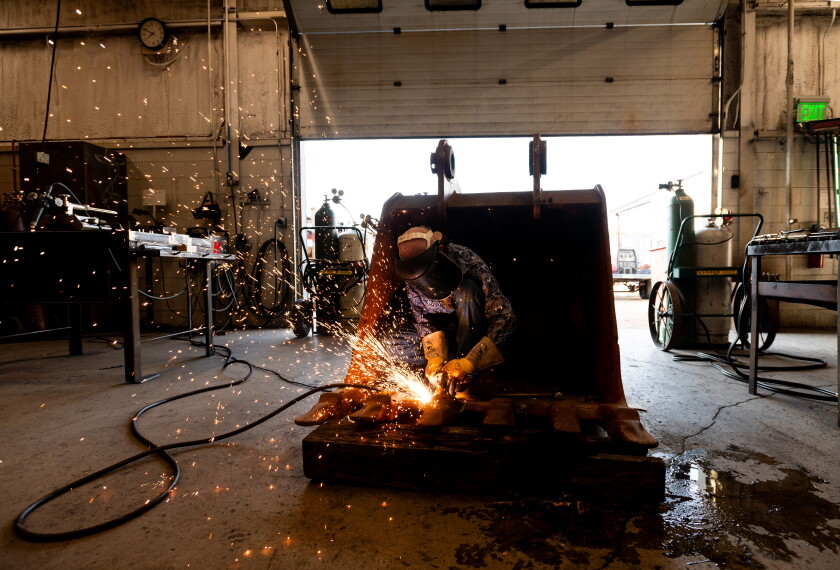
It is time to broaden the lens through which we define career readiness to include opportunities to prepare students for careers in the skilled labor force. A vibrant, well-funded career and technical education, or CTE, program can be an outstanding asset within a comprehensive high school.
Unfortunately, my concern is that the viability of CTE programs could face an uncertain future as school budget pressures increase, the rigor of academic standards is challenged, and greater value is placed upon high-stakes, state-mandated assessments.
CTE’s lack of prominence in the education reform conversation conveys a general belief that, if our aspirations for students were higher, we would not counsel our young adults to pursue a career in the skilled trades.
As education leaders, we have an obligation to reorient ourselves and our constituents to valuable learning opportunities offered through CTE. Many students flourish when challenged to integrate academic skills with real-world applications. The study of construction technology, culinary arts, automotive technology, and numerous other CTE offerings provides a rich context for the application of skills in literacy, numeracy, and the sciences. The project-based component of CTE is rich with examples of performance-based assessments, often more such examples than teachers in academic core subjects could ever hope to design in their content areas.
We must strengthen partnerships with local industry and corporate leaders, as well as regional trade associations, as an essential element of community outreach for any school district seeking to support high-quality CTE programs in comprehensive high schools. We must seek sponsorship from these groups to provide funding for the latest technology to equip the classroom and to support the curriculum with advanced training of faculty members and students.
We must promote the rigor that is inherent in well-designed CTE programs by meeting the 21st-century needs and industry standards of our local employers. Articulation agreements should be designed with local community colleges and other postsecondary institutions to enable students to earn advance credit toward credentials or certificates while still attending high school. In partnerships forged with care, career placement for students becomes the logical result.
Above all, we must nurture within our school communities the understanding that the skilled trades are an honorable, fulfilling, and lucrative postsecondary career option for many of our students. Then we must invest in revitalizing our CTE programs to provide these students with a meaningful exploration of the skills required to be career-ready to meet the demands of their chosen career pathways.