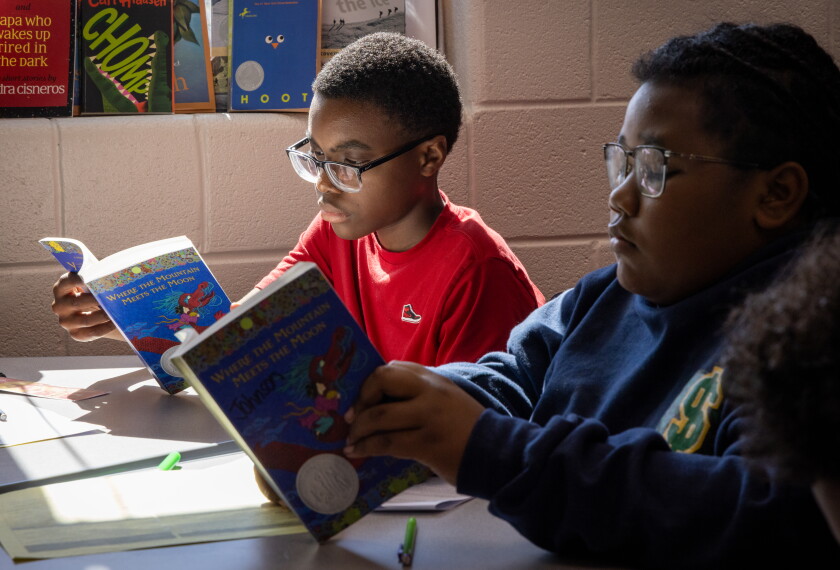
I have always loved reading. As a kid, I described it as a “movie in my head” that played whenever I dove into a story. I’ll never forget the thrill of eagerly flipping the onion-skin pages of a Scholastic catalogue, putting messy stars next to the titles I hoped my parents would get me.
When I became an English teacher, lots of kids told me they hated reading. This didn’t shock me, but I was unsure how to handle it. It’s hard to understand something you haven’t experienced. How could my students not enjoy the movie in their minds? What obstacles were keeping my students from getting excited about books?
Initially, I thought my job as an English teacher was to expose kids to literature they may not read on their own. But as I tried to figure out ways to get my kids excited about reading, I thought back to what made me love reading as a child. I realized that a huge factor was choosing what I wanted to read.
Putting those misshapen stars next to those Scholastic book titles created a sense of excitement and anticipation that stayed with me even after the book came. When I didn’t choose the book, reading it was like sitting through a movie I wasn’t interested in—I could manage it, and maybe eventually enjoy it, but it took more for me to get excited about it.
The more I reflected, read, and listened to other teachers and my own students, the more I realized that my kids might value literature more if they felt they had input in what we studied. It’s not always easy to relinquish some of the control I have as a teacher, but it’s one of the most important choices I can make. The more I can give students choice, the more engaged they’ll be in my classroom, and the richer our relationship will be because they feel heard.
Although I allow my 8th graders to choose books for independent reading, student-chosen books were never a formal unit of study in my classroom. All I asked them to do with those texts was to say what they did or didn’t like about them. That’s part of getting kids to love reading.
Building Relationships With Books
But I also wanted to create an in-class, curricular space for them to engage with the books they chose, with time in class not just to read but to critically engage with, question, and study texts they chose to help develop in-depth relationships with the books they were reading. So this year, I piloted a “book club” unit with my students.
In these “clubs,” my kids chose from a list of five books, all of which met my curricular aims for analytical and narrative writing, and for discussing race, gender, or identity. I assigned students who chose the same book to small groups, and they worked together to create a schedule for finishing the book on time. Each week, they checked in with their group members and with me to adjust the plan if necessary. I also gave students opportunities to discuss their book online with students from my other class periods who’d read the same book.
By providing choice, it was possible that all students would choose the same book (which didn’t happen), or that some of the books might be left unchosen (sadly, this did happen). While I was tempted to push kids into one group or another to even out the numbers, I didn’t, because that would have contradicted the choice spirit of the book clubs. So I let the chips fall where they may. This felt risky—I much prefer planning as many details as possible. But the payoff has been worth it.
I can feel students’ increased excitement about their reading. Students told me that they appreciated being allowed to choose not only which book they read but also how they set their own pace, since it gave them more control of the process and let them tailor the reading to their needs. I gave them a few quick guidelines to help them develop reading plans and practice creating and adjusting schedules. Those are skills they can apply to other classes and to their lives in the future.
Since each group is on its own schedule, this pushed me to get creative as a teacher with how and what I taught. I created a number of activities that are skills-focused, can be applied to multiple texts, and are almost entirely student-paced. Because the activities are less dependent on a singular text, students can take ownership of connecting what we discuss in class to the books they chose. This makes the connection much richer, as they work to uncover meanings and ideas instead of being told what a passage means.
Many students have also told me that they love meeting in small groups to help each other understand their books and gain new perspectives about what they’ve read. This is especially helpful for texts that are traditionally difficult to comprehend, like Lord of the Flies.
Considering Other Viewpoints
Students interact with a variety of people about the book, not just their usual classmates. This means they can enjoy the benefits of small, focused, and consistent groups in class with traditional face-to-face discussions, but they also can discuss the book with people whose perspectives they may not normally hear. While they could get help from me, I think it is more meaningful for them when they discover it together, questioning each other and realizing they can do it without my help.
The book clubs have been a success, but there are things I’d consider changing if I did it again. Some students chose books out of convenience or let their parents choose instead of really evaluating the options they had. In retrospect, I’d devote more class time to discussing their choices in depth so they could make more educated selections.
I’d also provide more opportunities for discussion across the five novels, so that students could build text-to-text connections that could deepen their understanding of their own.
Recently, I listened to my students do their weekly check-in about what they had read. One group of students discussed how “messed up” it was that Trevor Noah’s black classmates in Born a Crime weren’t given the same opportunities in school. In another, two girls told the boys in their group that they understood Starr’s frustrations when she stands up for herself in The Hate U Give. Both discussions were loud, full of laughter, and a little chaotic—everything I hoped I would see as they shared the experience of reading a good book together.