College & Workforce Readiness Documentary

A Year Interrupted

2020 High School Seniors Face COVID-19 and an Uncertain Future
By Elizabeth Rich & Brooke Saias — December 15, 2020 1 min read
College & Workforce Readiness Documentary

A Year Interrupted

2020 High School Seniors Face COVID-19 and an Uncertain Future
By Elizabeth Rich & Brooke Saias — December 15, 2020 1 min read
  • Save to favorites
  • Print

About This Documentary

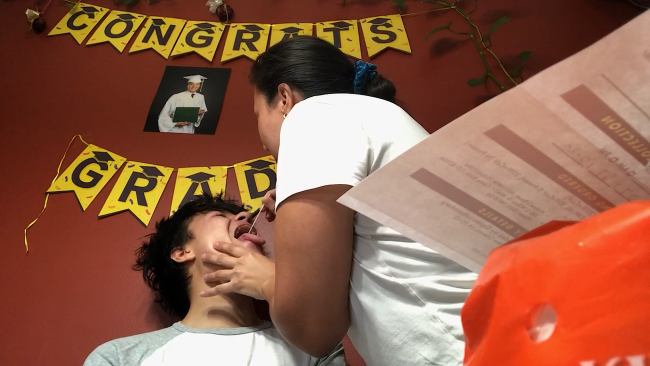
When COVID-19 shuttered school buildings this spring, Wakefield High School seniors Luis and Faith, like hundreds of thousands of other teens in the United States, were looking forward to graduation. In the midst of a devastating pandemic, they must find a way to celebrate their success and weigh big decisions, including college and how to afford it.

As the first generation of their immigrant families to attend a four-year college, Luis, the son of El Salvadoran parents, and Faith, the daughter of Nigerian parents, want nothing more than to fulfill their parents’ dreams, even as they feel the weight of their families’ expectations. Luis and Faith are fortunate though to have the backing of Wakefield’s college-access programs for young men (Cohort) and women (United Minority Girls) of color. But without the in-person support of their peers and the programs’ sponsors, all the emotional work of leaving high school and feeling prepared for college grows harder.

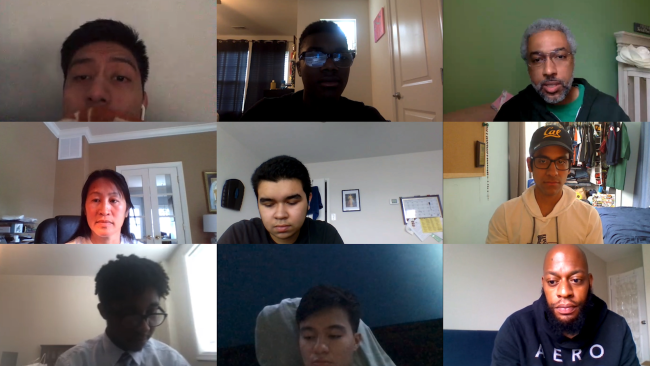
Told largely through Luis’ and Faith’s personal video diaries over a six-month period, this documentary follows the two friends as they navigate the end of a complicated school year and the beginning of a new one.

Wakefield High School in Arlington, Va., home to a successful college-going program for students of color, went fully remote on March 13, 2020.

About Wakefield's Programs

Wakefield High School in Arlington, Va., is home to a diverse student body of about 2,000 9th-12th grade students.
In 2000, the school created Cohort, a competitive academic program which serves to increase the college-going of its Black and Latino male students. Since its founding, the program has graduated more than 450 young men, 93 percent of whom have gone on to college.
In 2006, Wakefield founded United Minority Girls, which provides similar support to the school’s female students of color. Over the last 14 years, UMG has seen 97 percent of its more than 500 members attend college.
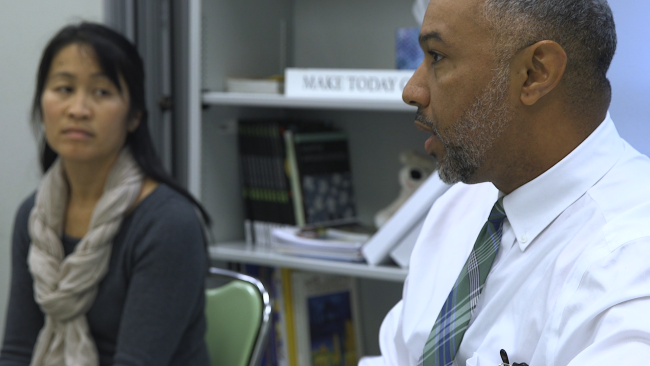
Today, Tim Cotman and Wendy Maitland, who work closely with both groups, serve as the programs’ co-sponsors. The programs are supported, in part, by longtime Arlington residents Ralph and Jan Johnson.

Directed & Produced by Elizabeth Rich, Brooke Saias
Filmed by Brooke Saias
Edited by Brooke Saias
Graphics by Kaylee Domzalski
Original Music by Sam Kyzivat
Sound Design by Cody Ball
Production Assistants: Cat Brunner, Graeme Sloane
Executive Producer: Emma Patti Harris
Additional Filming by: Anna Brannon, Luis Campos, Faith Achugamonu, Stephanie Achugamonu, Claudia Campos, Tim Cotman
Special thanks to: Luis Campos & Family, Faith Achugamonu & family, Tim Cotman, Wendy Maitland, Cohort & United Minority Girls students, John Clisham, Alan Beitler, Wakefield High School, Washington University in St. Louis, Virginia Commonwealth University, Dominique Bander, Madeline Will.

Coverage of the education of exceptionally promising students who have financial need is supported in part by a grant from the Jack Kent Cooke Foundation, at www.jkcf.org. Education Week retains sole editorial control over the content of this coverage.

Events

This content is provided by our sponsor. It is not written by and does not necessarily reflect the views of Education Week's editorial staff.
Sponsor
School Climate & Safety Webinar
There But Not Present: Rethinking Student Engagement
Learn how to recognize the early signs of disengagement and what the behavioral science reveals about which interventions actually work.
Content provided by Frontline Education
Teacher Preparation Webinar What Teacher Education Should Look Like in the Age of AI
Explore the current trends around the use of AI in teacher preparation and continuing education with data from the EdWeek Research Center.
English Learners Webinar How Can School Districts Better Support English Learners With Disabilities?
Join this webinar to hear recent findings from the EdWeek Research Center and discover practical strategies for improvement.

EdWeek Top School Jobs

Teacher Jobs
Search over ten thousand teaching jobs nationwide — elementary, middle, high school and more.
View Jobs
Principal Jobs
Find hundreds of jobs for principals, assistant principals, and other school leadership roles.
View Jobs
Administrator Jobs
Over a thousand district-level jobs: superintendents, directors, more.
View Jobs
Support Staff Jobs
Search thousands of jobs, from paraprofessionals to counselors and more.
View Jobs

Read Next

This content is provided by our sponsor. It is not written by and does not necessarily reflect the views of Education Week's editorial staff.
Sponsor
College & Workforce Readiness Quiz
Quiz Yourself: How Much Do You Know About Dual Enrollment?
Answer 7 questions about dual enrollment.
Content provided by Pearson
College & Workforce Readiness Transportation Is a Challenge for CTE Programs. How Districts Are Solving It
One district found innovative ways around this barrier.
4 min read
A school bus crosses over U.S. 160 from the Navajo Nation, left, onto the Hopi reservation, right, Monday, March 4, 2024, in Tuba City, Ariz. U.S. Highway 160 is the de facto border between the Navajo and Hopi Indian reservations and two time zones. Mind-bending time calculations is what people in the largest Native American reservation in the U.S. have to endure every March through November. The Navajo Nation, which stretches into Utah and New Mexico, will reset clocks for one hour later despite the rest of Arizona remaining on standard time.
A school bus crosses over U.S. 160 from the Navajo Nation, left, onto the Hopi reservation, right, on March 4, 2024, in Tuba City, Ariz. For school districts that offer offsite work-based learning experiences, transportation is a key challenge.
Matt York/AP
College & Workforce Readiness Why Schools, Colleges, and Employers Aren't Connected on Career-Technical Education
Too much data on education and the labor market exist in silos, a new report finds.
6 min read
South Career and Technical Academy student ambassadors and student councils hand out wristbands to new students as they arrives at CCSD’s newest high school, opening its doors for the 2025-2026 school year, on Aug. 11, 2025 , in Las Vegas .
South Career and Technical Academy students hand out wristbands to new students as they arrive at their school system's newest high school on Aug. 11, 2025, in Las Vegas. A new report recommends that school, college, and workforce leaders break down silos in their data, in order to better coordinate career-technical education goals.
Bizuayehu Tesfaye/Las Vegas Review-Journal via TNS
College & Workforce Readiness How Can Schools Connect Students to Careers? A New Compact Has a Plan—and Money
The compact comes at time of rising uncertainty for young workers due to AI.
5 min read
Leaders in education have a panel discussion about offering a path for students from schools into careers.
Industry leaders discuss the new Compact for America’s Youth during a launch event in Washington on Sept. 10, 2026. The compact brings organizations together to work on solutions to scale up career-connected learning.
Courtesy of CareerWise