School Climate & Safety

Bills Differ on Federal Role In Hate-Crimes Prevention

By Erik W. Robelen — October 31, 2001 3 min read
  • Save to favorites
  • Print

Hate crimes, which have been getting heightened attention since the Sept. 11 terrorist attacks, have found their way into this year’s congressional debate over education. At the behest of some conservatives, the House version of a bill to reauthorize the Elementary and Secondary Education Act would eliminate language in current law that authorizes the Department of Education to issue grants specifically for hate-crimes prevention. The Senate version of the bill would continue to allow the department to fund such grants.

The House position, written into that chamber’s bill last spring, has now prompted an outcry from more than 100 organizations, including education groups, the Anti-Defamation League, and the Arab American Institute.

“In the aftermath of the terrorist attacks of Sept. 11, some people have irrationally targeted their fellow Americans and others who appear to be of Muslim, Middle Eastern, or South Asian descent ... for violence,” the groups wrote in an Oct. 16 letter to Congress.

“Especially at this time,” the letter says, “we urge the conference committee to act to strengthen our nation’s core values of equality and respect for the individual by deferring to the Senate language on this matter—and retain the Department of Education’s existing authority to assist schools and local communities in developing and implementing these critical anti-violence and bias crime prevention initiatives.”

The issue arises as conferees from the House and the Senate are seeking to reconcile their respective versions of the ESEA. As of last week, congressional aides said no agreement had been reached on the hate- crimes provisions.

A Clash of Values

Some conservatives, citing what they say are philosophical objections to singling out offenses against members of certain groups as “hate” crimes, say there shouldn’t be any federal support for educational initiatives on the subject.

“The whole definition or category has concerned us,” said Jennifer A. Marshall, the director of family studies at the Family Research Council in Washington. “We believe that all crimes are crimes of hate.”

Rep. Mark Souder, R-Ind., a member of the House Education and the Workforce Committee, said he would prefer that the Senate language be removed.

“A lot of this revolves around homosexuality,” he said. “Many of the [educational] documents in effect try to preach acceptance of homosexuality as a lifestyle.” He said that troubles those who believe homosexuality is a sin.

But Mr. Souder acknowledged that it would be difficult for conservatives to prevail in the ESEA debate. He suggested that ultimately the two sides might compromise by retaining the Senate’s hate-crime provisions while adding House language designed to assuage some of the conservatives’ objections by including a “religious protection.”

The House language—modeled after a similar provision in juvenile-justice legislation, Mr. Souder said—stipulates that “the development of educational programs that prevent school-based crime, including crimes motivated by hate ... and any published materials that address school-based crime shall not recommend or require any action that abridges or infringes upon the constitutionally protected rights of free speech, religion, and equal protection of students, their parents, or legal guardians.”

That language “at least attempts to address my major concern,” Mr. Souder said. “People can in fact differ on homosexuality without differing on hate.”

Nancy M. Zirkin, the director of government relations for the Washington-based American Association of University Women, said she has no particular objection to the House language, as long as the Senate provisions also remain.

The constitutional protections “would [apply] to any law that anyone would enact,” she said.

While the Department of Education has provided some money for activities intended to prevent hate crimes, its role has been fairly limited. For example, the department issued seven grants for a total of $1.8 million in 1996 to address escalating ethnic and racial conflicts.

In 1999, the department issued a guide for schools on protecting students from harassment and hate crimes.

Last year, the Justice and Education departments jointly provided a $1 million grant to form Partners Against Hate, an information clearinghouse on preventing hate crimes.

Related Tags:

Events

This content is provided by our sponsor. It is not written by and does not necessarily reflect the views of Education Week's editorial staff.
Sponsor
Assessment Webinar
Measuring What Matters: How District Leaders Are Redefining Student Assessment
In this panel discussion, district leaders and systems experts will examine the gap between the outcomes we want and the systems in place.
Content provided by Otus
Early Childhood Webinar Selling Into Early Learning: New Survey Data and Strategies for Marketers
Selling into PreK? Get fresh EdWeek Research Center data and strategies to position your products and reach the right early learning buyers.
Artificial Intelligence Webinar AI and 'Techlash' Are on a Collision Course. How Should Schools Respond?
Learn what strategies and tactics schools can develop to encourage smart and responsible AI use, while also enforcing tech guardrails.

EdWeek Top School Jobs

Teacher Jobs
Search over ten thousand teaching jobs nationwide — elementary, middle, high school and more.
View Jobs
Principal Jobs
Find hundreds of jobs for principals, assistant principals, and other school leadership roles.
View Jobs
Administrator Jobs
Over a thousand district-level jobs: superintendents, directors, more.
View Jobs
Support Staff Jobs
Search thousands of jobs, from paraprofessionals to counselors and more.
View Jobs

Read Next

School Climate & Safety A Shooting Strikes an Elementary School. Some Doubt Policy Change Will Follow
Tragedies like the one in Bend, Ore., draw public outcry, but typically not swift change on school safety.
5 min read
Children place flowers at a makeshift memorial outside Silver Rail Elementary in Bend, Ore., Friday, Oct. 16, 2026, a day after a deadly shooting.
Children place flowers at a makeshift memorial outside Silver Rail Elementary in Bend, Ore., Friday, Oct. 16, 2026, a day after a deadly shooting. The child victims, ages 5, 8, and 11, include the youngest person killed in a school shooting since Education Week began<a href="https://www-edweek-org.ezproxy.baylor.edu/leadership/school-shootings-this-year-how-many-and-where/2026/01" target="_blank" link-data="{&quot;cms.site.owner&quot;:{&quot;_ref&quot;:&quot;00000173-0561-d1f0-a17f-adef4bee0000&quot;,&quot;_type&quot;:&quot;ae3387cc-b875-31b7-b82d-63fd8d758c20&quot;},&quot;cms.content.publishDate&quot;:1792177418426,&quot;cms.content.publishUser&quot;:{&quot;_ref&quot;:&quot;00000180-d7b2-d193-a1b2-dfbba3aa0001&quot;,&quot;_type&quot;:&quot;6aa69ae1-35be-30dc-87e9-410da9e1cdcc&quot;},&quot;cms.content.updateDate&quot;:1792177418426,&quot;cms.content.updateUser&quot;:{&quot;_ref&quot;:&quot;00000180-d7b2-d193-a1b2-dfbba3aa0001&quot;,&quot;_type&quot;:&quot;6aa69ae1-35be-30dc-87e9-410da9e1cdcc&quot;},&quot;link&quot;:{&quot;disableUtmTracking&quot;:false,&quot;target&quot;:&quot;NEW&quot;,&quot;attributes&quot;:[],&quot;url&quot;:&quot;https://www-edweek-org.ezproxy.baylor.edu/leadership/school-shootings-this-year-how-many-and-where/2026/01&quot;,&quot;_id&quot;:&quot;000001a1-4619-d1d1-a3f3-f77b151b0000&quot;,&quot;_type&quot;:&quot;ff658216-e70f-39d0-b660-bdfe57a5599a&quot;},&quot;linkText&quot;:&quot; tracking these incidents&quot;,&quot;theme.brightspot-theme-default.:core:enhancement:Enhancement.hbs.enhancementAlignment&quot;:null,&quot;theme.brightspot-theme-default.:core:link:Link.hbs._template&quot;:null,&quot;theme.brightspot-theme-default.:core:link:Link.hbs.type&quot;:null,&quot;theme.brightspot-theme-default.:core:link:Link.hbs._preset&quot;:null,&quot;theme.brightspot-theme-default.:core:enhancement:Enhancement.hbs._preset&quot;:null,&quot;_id&quot;:&quot;000001a1-4619-d1d1-a3f3-f77b14b10001&quot;,&quot;_type&quot;:&quot;809caec9-30e2-3666-8b71-b32ddbffc288&quot;}"> </a>tracking those incidents eight years ago.
Joe Kline/AP
School Climate & Safety Three Children and Teacher Killed in Oregon Elementary School Shooting
Authorities in Bend, Ore., said the attacker gained entry by shooting through locked doors.
2 min read
Police tape is placed outside Silver Rail Elementary school following a shooting, on Oct. 15, 2026 in Bend, Ore.
Police tape is placed outside Silver Rail Elementary School following a shooting, on Oct. 15, 2026 in Bend, Ore. Authorities said an attacker shot through locked school doors to enter the building.
Joe Kline/AP
School Climate & Safety 4 Ways AI Data Centers Can Affect Schools
From health to productivity and finances, data centers could pose risks for students and schools.
3 min read
Carroll
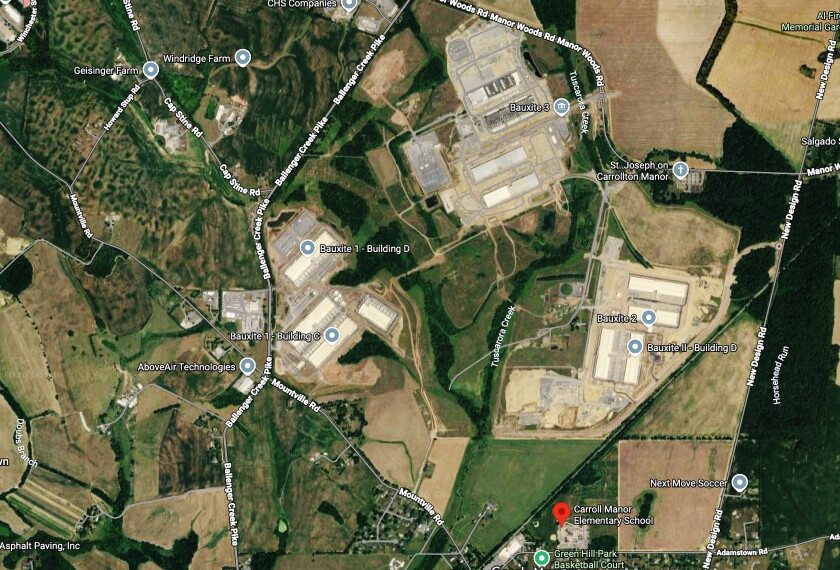
The Quantum Frederick Data Center Campus near the Carroll Manor Elementary School.
Map data ©2026 Google, Imagery ©2026
School Climate & Safety For Students Walking to School, the Route Can Be Deadly. What Can Make It Safer?
School districts, including New York City, have rolled out a number of strategies to reduce risks.
5 min read
A student leaving Greenspun Junior High School in Henderson, Nev., enters a car in the travel lane of Valle Verde Drive on Sept. 14, 2022. Pedestrian fatalities near schools are most likely to occur in the early morning and early evening hours, federal data show.
Rachel Aston/Las Vegas Review-Journal via TNS