School Climate & Safety

How to Spend $1 Billion in School Safety Funds: Here’s What the Feds Recommend

By Libby Stanford — September 20, 2022 4 min read
The U.S. Department of Education urged schools to use federal funds to support the social, emotional, mental, and physical health needs of students in a "dear colleague" letter sent Sept. 15.
  • Save to favorites
  • Print

States should prioritize schools that are inclusive, equitable, and meet students’ social and emotional needs in spending $1 billion they’re getting to improve school safety, U.S. Department of Education officials say.

The Education Department released a “Dear Colleague” letter to state education agencies on Sept. 15, which outlines a list of priorities states should consider when doling out additional financial support for mental health and student well-being from the Bipartisan Safer Communities Act, passed in response to mass shootings like that at Robb Elementary in Uvalde, Texas, earlier this year.

The money is allocated through Title IV-A of the Every Student Succeeds Act. The department has titled the new grant funding the “Stronger Connections” grant program. The program provides the grants to state education agencies, which administer the funds to local districts.

California received the largest portion of funds with $119.8 million, followed by Texas with $93.9 million. Districts that receive the funds will have until the end of 2026 to spend them.

While the money can be used for limited facilities improvements, such as repairing locks on doors, the Education Department is urging districts to instead invest in inclusive and equitable practices that meet the social, mental, and physical needs of students.

“Research consistently shows that safe, inclusive, and supportive learning environments are associated with improved academic achievement and emotional well-being of students, as well as with reductions in disciplinary actions,” U.S. Education Secretary Miguel Cardona said in the letter. “Accordingly, students who experience a sense of belonging in school are also more likely to exhibit positive behaviors.”

State education departments will have the ability to set criteria for which districts receive the funding and how much. In the letter, Cardona encouraged state agencies to give the money to schools with high rates of poverty and one of the following characteristics: a high student-to-mental health professional ratio; high rates of chronic absenteeism, exclusionary discipline, referrals to the juvenile justice system, bullying, harassment, community and school violence, or substance abuse; or schools that recently experienced a natural disaster or traumatic event.

In addition to the criteria, the Education Department recommended that state agencies prioritize grants for schools that do the following:

1. Use evidence-based strategies to meet students’ social, emotional, and physical needs

The department’s first recommendation would have state education agencies prioritize grants for school districts that have shown a commitment to “implementing comprehensive, evidence-based strategies that meet each student’s social, emotional, physical, and mental well-being needs; create positive, inclusive, supportive school environments; and increase access to place-based interventions and services.”

Federal law classifies evidence-based strategies into different tiers. State agencies should prioritize school districts with the strongest types of evidence—Tier 1 “strong” evidence and Tier 2 “moderate” evidence, the letter said.

The Education Department also urged schools to “continuously evaluate interventions, strategies, and practices so that they can ensure efforts are leading to improvement and success.” Schools can use the department’s online tools, the “What Works Clearinghouse” and “Best Practices Clearinghouse,” and technical assistance centers to help select evidence-based strategies, the letter said.

2. Engage the community when selecting and implementing new strategies for safe schools

Schools should include students, families, educators, staff, and community organizations in developing and implementing strategies for safe and supportive learning environments, the letter said. That includes “paying close attention to the communities that face systemic barriers,” the letter said.

Engagement with families should happen early in the decisionmaking process and “be ongoing and collaborative,” the department said.

3. Use school safety policies and practices that advance equity and recognize trauma

The department recommends that schools use the funding “to design and implement student-centered policies and practices that increase student belonging and provide safe, nurturing, and welcoming environments,” the letter said.

While improvements like replacing locks on doors and evaluating building entrances are covered under the grant, they “may have detrimental effects” if schools aren’t also working to promote student learning, growth, and positive learning environments, the letter said.

Specifically, the department encouraged state agencies and local districts to use the money to pay for professional development, comprehensive emergency management planning, and behavioral and trauma- or grief-informed mental health supports for students. Schools should recognize that students of color, English-learners, LGBTQ students, and students with disabilities might all experience safety and discipline policies in different ways, the letter said.

Education associations expressed support for the priorities outlined in the letter.

“State education leaders are committed to providing all students an equitable education in a safe and supportive environment, and the Bipartisan Safer Communities Act will help bolster those efforts across the country,” said Melissa McGrath, chief of staff the Council of Chief State School Officers. “We appreciate the U.S. Department of Education creating an allocation process that ensures transparency while allowing the funding to get to schools as soon as possible.”

Events

Artificial Intelligence Webinar AI and 'Techlash' Are on a Collision Course. How Should Schools Respond?
Learn what strategies and tactics schools can develop to encourage smart and responsible AI use, while also enforcing tech guardrails.
This content is provided by our sponsor. It is not written by and does not necessarily reflect the views of Education Week's editorial staff.
Sponsor
Special Education Webinar
Special Education Disputes & Rising Costs: Protecting Your District
Special education costs and risks are rising. Learn how stronger IEP and Medicaid processes help districts protect funding and compliance.
Content provided by Relay
This content is provided by our sponsor. It is not written by and does not necessarily reflect the views of Education Week's editorial staff.
Sponsor
Personalized Learning Webinar
Differentiation That Delivers: Proven Practices From High-Growth Districts
Make every minute count. Proven strategies from educators and leaders driving real student growth. Save your seat!
Content provided by i-Ready, Curriculum Associates

EdWeek Top School Jobs

Teacher Jobs
Search over ten thousand teaching jobs nationwide — elementary, middle, high school and more.
View Jobs
Principal Jobs
Find hundreds of jobs for principals, assistant principals, and other school leadership roles.
View Jobs
Administrator Jobs
Over a thousand district-level jobs: superintendents, directors, more.
View Jobs
Support Staff Jobs
Search thousands of jobs, from paraprofessionals to counselors and more.
View Jobs

Read Next

School Climate & Safety A Shooting Strikes an Elementary School. Some Doubt Policy Change Will Follow
Tragedies like the one in Bend, Ore., draw public outcry, but typically not swift change on school safety.
5 min read
Children place flowers at a makeshift memorial outside Silver Rail Elementary in Bend, Ore., Friday, Oct. 16, 2026, a day after a deadly shooting.
Children place flowers at a makeshift memorial outside Silver Rail Elementary in Bend, Ore., Friday, Oct. 16, 2026, a day after a deadly shooting. The child victims, ages 5, 8, and 11, include the youngest person killed in a school shooting since Education Week began<a href="https://www-edweek-org.ezproxy.baylor.edu/leadership/school-shootings-this-year-how-many-and-where/2026/01" target="_blank" link-data="{&quot;cms.site.owner&quot;:{&quot;_ref&quot;:&quot;00000173-0561-d1f0-a17f-adef4bee0000&quot;,&quot;_type&quot;:&quot;ae3387cc-b875-31b7-b82d-63fd8d758c20&quot;},&quot;cms.content.publishDate&quot;:1792177418426,&quot;cms.content.publishUser&quot;:{&quot;_ref&quot;:&quot;00000180-d7b2-d193-a1b2-dfbba3aa0001&quot;,&quot;_type&quot;:&quot;6aa69ae1-35be-30dc-87e9-410da9e1cdcc&quot;},&quot;cms.content.updateDate&quot;:1792177418426,&quot;cms.content.updateUser&quot;:{&quot;_ref&quot;:&quot;00000180-d7b2-d193-a1b2-dfbba3aa0001&quot;,&quot;_type&quot;:&quot;6aa69ae1-35be-30dc-87e9-410da9e1cdcc&quot;},&quot;link&quot;:{&quot;disableUtmTracking&quot;:false,&quot;target&quot;:&quot;NEW&quot;,&quot;attributes&quot;:[],&quot;url&quot;:&quot;https://www-edweek-org.ezproxy.baylor.edu/leadership/school-shootings-this-year-how-many-and-where/2026/01&quot;,&quot;_id&quot;:&quot;000001a1-4619-d1d1-a3f3-f77b151b0000&quot;,&quot;_type&quot;:&quot;ff658216-e70f-39d0-b660-bdfe57a5599a&quot;},&quot;linkText&quot;:&quot; tracking these incidents&quot;,&quot;theme.brightspot-theme-default.:core:enhancement:Enhancement.hbs.enhancementAlignment&quot;:null,&quot;theme.brightspot-theme-default.:core:link:Link.hbs._template&quot;:null,&quot;theme.brightspot-theme-default.:core:link:Link.hbs.type&quot;:null,&quot;theme.brightspot-theme-default.:core:link:Link.hbs._preset&quot;:null,&quot;theme.brightspot-theme-default.:core:enhancement:Enhancement.hbs._preset&quot;:null,&quot;_id&quot;:&quot;000001a1-4619-d1d1-a3f3-f77b14b10001&quot;,&quot;_type&quot;:&quot;809caec9-30e2-3666-8b71-b32ddbffc288&quot;}"> </a>tracking those incidents eight years ago.
Joe Kline/AP
School Climate & Safety Three Children and Teacher Killed in Oregon Elementary School Shooting
Authorities in Bend, Ore., said the attacker gained entry by shooting through locked doors.
2 min read
Police tape is placed outside Silver Rail Elementary school following a shooting, on Oct. 15, 2026 in Bend, Ore.
Police tape is placed outside Silver Rail Elementary School following a shooting, on Oct. 15, 2026 in Bend, Ore. Authorities said an attacker shot through locked school doors to enter the building.
Joe Kline/AP
School Climate & Safety 4 Ways AI Data Centers Can Affect Schools
From health to productivity and finances, data centers could pose risks for students and schools.
3 min read
Carroll
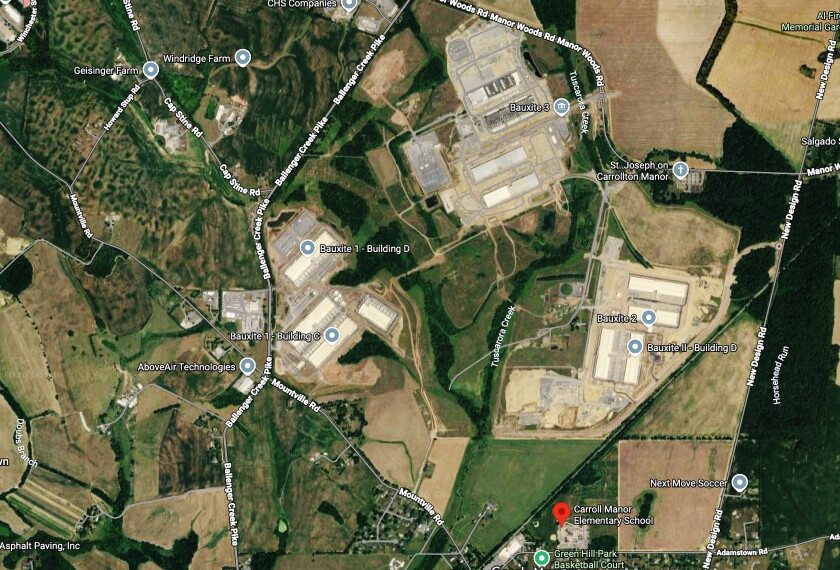
The Quantum Frederick Data Center Campus near the Carroll Manor Elementary School.
Map data ©2026 Google, Imagery ©2026
School Climate & Safety For Students Walking to School, the Route Can Be Deadly. What Can Make It Safer?
School districts, including New York City, have rolled out a number of strategies to reduce risks.
5 min read
A student leaving Greenspun Junior High School in Henderson, Nev., enters a car in the travel lane of Valle Verde Drive on Sept. 14, 2022. Pedestrian fatalities near schools are most likely to occur in the early morning and early evening hours, federal data show.
Rachel Aston/Las Vegas Review-Journal via TNS