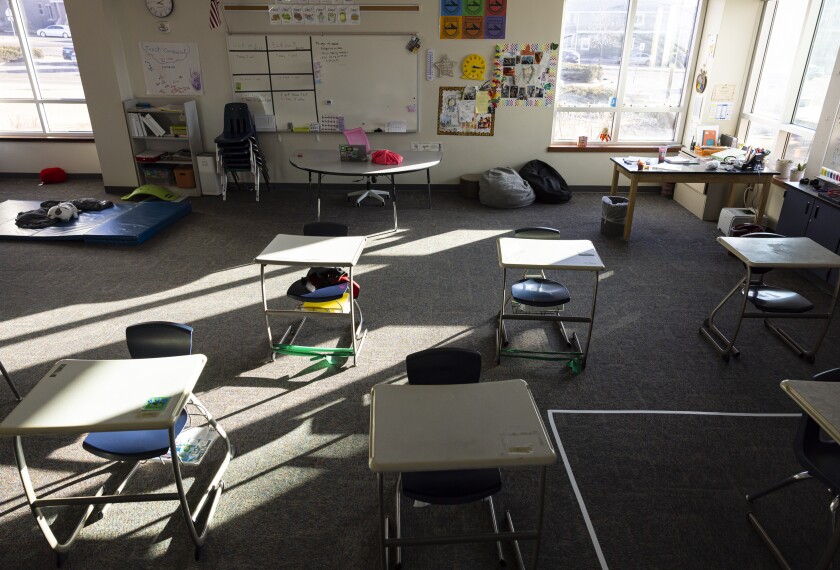
Chronic absenteeism can serve as a barometer of a healthy school environment because everyone from classroom teachers to custodians plays a role in helping students build strong attendance habits.
It’s especially important for schools to understand the factors that affect student attendance now, after pandemic-related interruptions caused chronic absenteeism to soar, according to a new report from Attendance Works and FutureEd, a think tank at Georgetown University.
“It’s really remarkable how high the rates of chronic absenteeism have gotten,” said Phyllis Jordan, associate director of FutureEd and author of the report. “None of those [learning recovery] interventions do any good if a student doesn’t show up for school.”
The report’s authors worked with a researcher at Texas Tech University to review reams of research and identify 27 factors that affect attendance—everything from immediate strategies, like building strong student-teacher relationships, to systemic issues that can hamper students’ coming to school, like protocols for dealing with immigration enforcement.
The report explains the research on how each factor affects chronic absenteeism, how well common interventions are supported by evidence, and other factors for schools to consider as they tailor their approaches.
“I’m hoping that overwhelmed administrators who are looking for solutions and hear about a good idea can go and look at this and say, ‘How does this work?’ or ‘Does it work?’,” Jordan said.
Here are five examples of strategies to try to boost attendance.
1. Stronger family engagement makes a difference
What the research says: Multiple researchers have linked regular communication with parents—through text messages, postcards, and even billboards—to improved student attendance.
In a 2021 report, EveryDay Labs, an organization that promotes student attendance, found that messages to parents were more effective when they included the exact number of days their student had missed.
Try this: School and district leaders can partner with parents to build better attendance habits by sharing regular, personalized messages with a tone that is empathetic, not punitive, the report said.
More from the EdWeek archives: 3 Signs That Schools Are Sending the Wrong Message About Attendance
2. School-based telehealth boosts attendance
What the research says: On-site telehealth can reduce the amount of class time students miss to travel to health care provider appointments, and it can help low-income students access care for health issues that may threaten to keep them out of school. Research on the strategy is promising, FutureEd found.
A 2023 study by researchers at Duke University and the University of North Carolina-Chapel Hill found that students had 10 percent fewer absences if they attended schools with telehealth access.
Try this: Some districts have focused their telehealth on health conditions that most regularly contribute to absenteeism. In Rochester, N.Y., for example, schools worked to reduce asthma attacks through a partnership with the University of Rochester in which health care providers assessed students needs for medications and interventions before their condition became a crisis. Other schools have used telehealth to address student mental health needs.
More from the EdWeek archives: Telemedicine Could Help Keep Kids in Class
3. Clean clothes can be a game changer
What the research says: Some schools have helped low-income students address a key barrier to attendance by providing on-site washers and dryers to allow them to do laundry.
While there isn’t much academic research on this strategy, reports by participating schools show promise, the FutureEd report said. A New Jersey principal, for example, said washing machines were a key part of a strategy to boost attendance. Some 84 percent of students attended school at least 90 percent of the time after the school installed washing machines, compared to 46 percent beforehand.
Try this: Schools have paid for machines through grants from manufacturers like Whirlpool or partnerships with local organizations, like United Way chapters, the report said. Some school social workers have told Education Week they’ve purchased washing machines using federal funding designed to meet the needs of homeless students.
More from the EdWeek archives: Confronting Poverty’s Challenges, a District Regains Academic Footing
4. Tackling school refusal, anxiety
What the research says: Educators have reported anxiety and school refusal as growing concerns following pandemic closures. The report’s authors rated research on school avoidance strategies as “emerging” and “promising.”
A 2018 analysis of eight studies found that interventions designed to address school refusal, such as cognitive-behavioral therapy, led to improved student attendance, though it did not ease underlying anxiety.
Try this: Use resources from the School Avoidance Alliance to better understand the causes of school avoidance and examine strategies other schools have tried.
More from the EdWeek archives: Addressing the Link Between Anxiety, Depression, and Student Attendance
5. Home visits help students in need of the most support
What the research says: Connecticut used federal COVID-19 relief aid to launch a home-visiting program, through which school staff and trained volunteers in 15 districts visited about 8,700 chronically absent students at home. The aim was to strengthen school-home relationships and to identify barriers to attendance, and FutureEd researchers found several studies documenting a strong research base for the approach.
“The first-year results show that attendance rates increased by four percentage points in the month immediately following the first visit and climbed 15 percentage points after six months,” the report said, citing research by the Center for Connecticut Education Research Collaboration.
Try this: Home visiting strategies should be supported by “strong infrastructure,” including timely and accurate data on student attendance patterns, the report cautioned. Districts interested in home visits should assign a coordinator to review feasibility, design staff training, and coordinate with community organizations that could lend a hand.
More from the EdWeek archives: This State Set Up a Program to Reduce Chronic Absences. It Worked
Read more: To read the research on nearly two dozen additional strategies—including case management, early warning systems, incentive programs, and free school meals—read the full report here.