Student Well-Being & Movement

Vaping Is Still a Big Problem, New Data Show. Here’s What Schools Can Do About It

By Arianna Prothero — October 06, 2022 3 min read
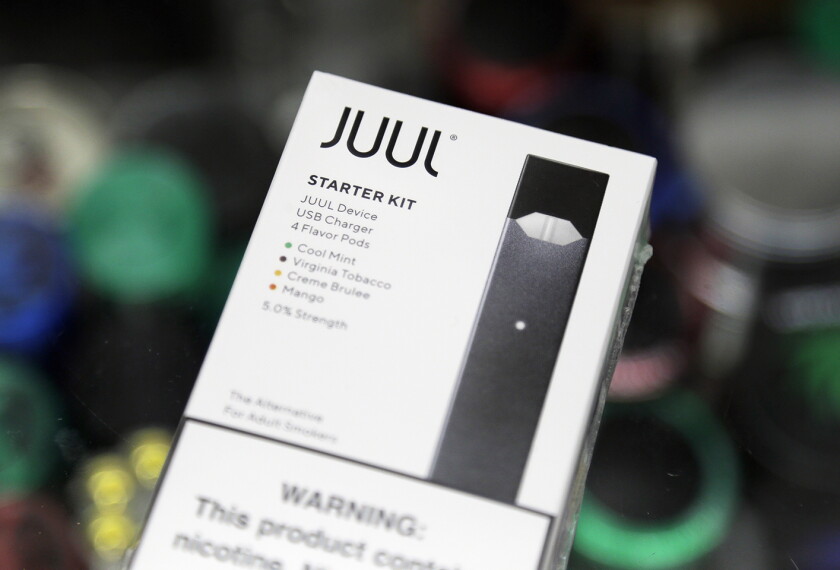
A Juul electronic cigarette starter kit at a smoke shop in New York on Dec. 20, 2018. In a deal announced Tuesday, Sept. 6, 2022, electronic cigarette maker Juul Labs will pay nearly $440 million to settle a two-year investigation by 33 states into the marketing of its high-nicotine vaping products, which have long been blamed for sparking a national surge in teen vaping.
  • Save to favorites
  • Print

More than one of every 10 high school students is vaping, according to newly released federal data.

While e-cigarette usage appears to be down from its pre-pandemic peak—when about 6 million middle and high school students reported vaping, compared with 2.6 million now—it’s impossible to say for certain if that is the case. The National Youth Tobacco Survey has changed how it collects data in recent years, so the U.S. Centers for Disease Control, which helps analyze and publish the data, cautions against making comparisons with previous years.

Educators, however, may draw some comfort from the apparent slowdown in vaping, which was driving schools to become increasingly creative and desperate in combating the habit, from installing vapor-detecting devices in bathrooms to creating e-cigarette buy-back programs to suing e-cigarette makers. In addition to coming in tasty flavors and being easy to hide from adults, many adolescents may not know that e-cigarettes are bad for their health or even that they contain nicotine—although awareness is on the rise.

Prior to the pandemic, vaping among adolescents had been accelerating, with about 20 percent of high schoolers and 5 percent of middle schoolers reporting e-cigarette use in 2019 and 2020.

Those numbers dropped to 11 percent and 2.8 percent respectively in 2021, when the survey was conducted fully online for the first time to include students learning from home. Up until 2018, students took the survey using pencil and paper in school. In 2019 and 2020 they used tablets. The National Youth Tobacco Survey used a web-based survey in 2021 and 2022, with half of students taking it in school in 2021 and nearly all taking it from school in spring 2022.

This year, 14 percent of high school students and 3 percent of middle school students report that they had vaped in the past 30 days. Among those students, 42 percent said they were vaping frequently (meaning 20 of the last 30 days) and nearly 28 percent saying they were using e-cigarettes daily.

Flavored e-cigarettes are very popular with adolescents who vape—85 percent use flavored e-cigarettes. The most popular flavors are fruit; candy, desserts or other sweets; mint; and menthol.

What can schools do to stop kids from vaping?

Vaping has proven to be especially difficult for educators to police as it’s relatively easy for students to hide.
See also

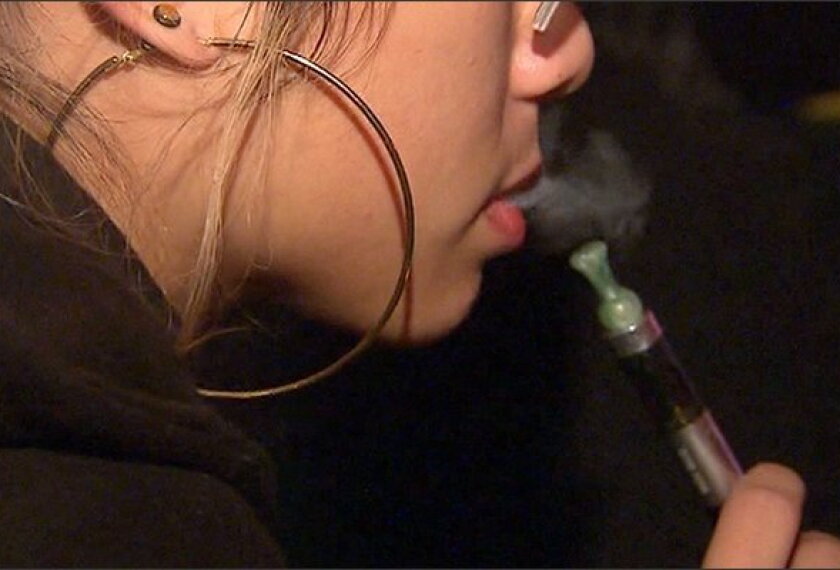
Vaporizer pens and other sleek electronic devices convert nicotine-infused liquids to water vapor that can be inhaled.
KSTU-TV

Other than suing e-cigarette makers (which several districts have done), schools can take several steps to curb vaping among their students, according to advice that experts and school leaders have shared with Education Week. Those recommendations include:

  • Have clear policies and plans. Schools should have clear and well-communicated policies about the consequences for vaping on campuses. Schools should also have plans for screening students who are addicted to e-cigarettes and getting appropriate help for those students who are.
  • Try to avoid the use of scare tactics or discipline. These approaches won’t work without an education component. Students tune out when they hear them.
  • Design an educational approach. This should be broader than just educating students on the dangers of vaping (which surveys show many adolescents don’t know about). It should also employ elements of media literacy in which students are taught to see how advertising campaigns are trying to manipulate them in unhealthy ways.
  • Include adults in anti-vaping efforts in meaningful ways. Focusing only on the kids and not involving parents, caregivers, teachers, principals, coaches, and even after-school providers will fail to have a meaningful impact on curbing vaping use among adolescents.

While e-cigarettes may not be as unhealthy as traditional, “combustible” cigarettes, they still have many toxic chemicals and metals in them. They also often have higher concentrations of nicotine than traditional cigarettes and present a hazard to young, developing brains.

Experts don’t know what the long-term effects of e-cigarette use is because the devices haven’t been around long enough, unlike the vast amount of evidence showing that traditional tobacco products have serious, long-term consequences on people’s health. And many teens who start vaping soon progress to traditional cigarettes.

Related Tags:

Events

This content is provided by our sponsor. It is not written by and does not necessarily reflect the views of Education Week's editorial staff.
Sponsor
Recruitment & Retention Webinar
Hiring, Retention, and Fill Rates: A Data-Driven Sub Strategy
Explore what keeps substitutes coming back and hear how one district rebuilt its substitute hiring process and improved its fill rate.
Content provided by Frontline Education
Early Childhood K-12 Essentials Forum Early Childhood Education: Building Essential Skills for Success
Join this free virtual event to examine the biggest challenges in supporting young children, from preschool through elementary school. 
This content is provided by our sponsor. It is not written by and does not necessarily reflect the views of Education Week's editorial staff.
Sponsor
Student Absenteeism Webinar
Attendance Isn't an Attendance Problem
Boost attendance by strengthening relationships, belonging, and support with practical strategies from Doug Fisher & Nancy Frey.
Content provided by Corwin

EdWeek Top School Jobs

Teacher Jobs
Search over ten thousand teaching jobs nationwide — elementary, middle, high school and more.
View Jobs
Principal Jobs
Find hundreds of jobs for principals, assistant principals, and other school leadership roles.
View Jobs
Administrator Jobs
Over a thousand district-level jobs: superintendents, directors, more.
View Jobs
Support Staff Jobs
Search thousands of jobs, from paraprofessionals to counselors and more.
View Jobs

Read Next

Student Well-Being & Movement Meta Reaches $17B Settlement With States Over Teen Social Media Addiction
The deal with 47 states requires Meta to add child-safety measures to Facebook and Instagram.
4 min read
Head of Instagram, Adam Mosseri, leaves the Ronald V. Dellums Federal Building & United States Courthouse as Meta is on trial over social media addiction in Oakland, California, on August 25, 2026. A coalition of US states is seeking around $200 billion in damages against Meta, which they accuse of intentionally designing Facebook and Instagram to be addictive for children, in a landmark trial.
Adam Mosseri, the head of Instagram, leaves the Ronald V. Dellums Federal Building and United States Courthouse in Oakland, Calif., on Aug. 25, 2026. Meta, Instagram's parent company, has agreed to a $17 billion settlement with 47 states to end a trial over teens' social media addiction.
Karl Mondon / AFP via Getty Images
Student Well-Being & Movement Nebraska's Largest School District Asks Police to Not Use Electric Shock Gloves on Students
Omaha's superintendent made the request after a report that federal immigration officials planned to to use the tools.
5 min read
A look at a Compliant Technologies Generated Low Output Voltage Emitter, G.L.O.V.E., at Omaha Police Headquarters in Omaha, Neb. on Friday, Aug. 14, 2026. The Generated Low Output Voltage Emitter, G.L.O.V.E., "is a less-lethal tool intended to provide officers with an additional option when responding to resistance or a potentially volatile situation," according to the Omaha Police Department.
A photo taken at Omaha, Neb., police headquarters on Aug. 14, 2026, shows a technology known as Generated Low Output Voltage Emitter, or G.L.O.V.E. Photo by Nikos Frazier/Omaha World-Herald via Getty Images. Police in the city agreed this week to stop carrying the gloves, which can deliver electric shocks, while working in schools in Nebraska’s largest public school district.
Nikos Frazier/Omaha World-Herald via Getty Images
Student Well-Being & Movement Opinion Why ‘Just Ask for Help’ Isn't Enough for Teens—and What Schools Can Do Instead
Mental health messaging is out of step with what students actually need, explains one high schooler.
Aanya Remi
4 min read
082024 Opinion REMI hesitant to seek help ly
Liz Yap/Education Week and Canva
Student Well-Being & Movement How a School Bus Will Serve as a Sensory Reprieve for Little Learners
A rural Head Start program will deploy the bus to give young kids tools to manage their emotions.
4 min read
HB A4346
An activity table inside the Pocono Services for Families and Children's new sensory bus on Aug. 20, 2026, in East Stroudsburg, Pa. The bus is set to hit the road this spring to help teach young students how to regulate their emotions through play.
Hannah Beier for Education Week
