
Special Report
Mathematics Explainer

How Addition Fluency Develops: A Visual Explainer

By Vanessa Solis & Stephen Sawchuk — May 11, 2023 1 min read
Illustration of a giant red addition symbol on a field of numbers
  • Save to favorites
  • Print

As surely as 2+2=4, it also equals a beginning step on students’ mathematics journey.

Single-digit addition facts like these are so heavily used in mathematics that it’s critical that students ultimately commit them to memory so they don’t have to compute each time they appear.

ARTICLE 32SRMATH How Addition Fact Fluency develops Stephen VS

Research indicates that most students use a variety of increasingly sophisticated strategies as they learn their math facts, and that these strategies ultimately help them store the sums in their long-term memory so they can instantly recall them later. (Some research, in fact, indicates that adults continue to use these strategies long after they’ve become fluent in addition facts—though generally to a lesser degree.)

Take a look at how these strategies develop.

Then, check out our report on math foundations, where you’ll find an explainer and bibliography on math facts, and another aimed at helping teachers and curriculum planners craft a strong approach to fact fluency.

COUNTING ALL

Young students first learn to add by counting every number up to the sum.

ARTICLE 32SRMATH How Addition Fact Fluency develops Stephen VS Counting ON

COUNTING ON (OR COUNTING UP)

Students realize that the sum is six more than 4 in the counting sequence, and they can simply begin counting from 4.

Eventually, no matter the order of the numbers to be added, or “addends,” they automatically choose the larger and count from there.

ARTICLE 32SRMATH How Addition Fact Fluency develops Stephen VS Conting GIF

DECOMPOSITION

Students see that a number can be decomposed into various parts and use that knowledge to make addition easier.

ARTICLE 32SRMATH How Addition Fact Fluency develops Stephen VS decomposition a

There are various strategies that rely on decomposition for larger sums, including

ARTICLE 32SRMATH How Addition Fact Fluency develops Stephen VS  decomposition final

DIRECT RETRIEVAL

Students have stored the math fact in long-term memory and can retrieve it without falling back on a strategy.
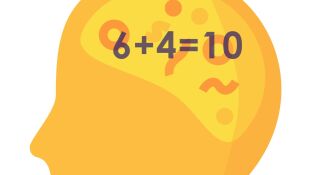
ARTICLE 32SRMATH How Addition Fact Fluency develops Stephen VS

Related Tags:

Vanessa Solis, Associate Design Director and Stephen Sawchuk, Assistant Managing Editor contributed to this article.

Events

Early Childhood Webinar Selling Into Early Learning: New Survey Data and Strategies for Marketers
Selling into PreK? Get fresh EdWeek Research Center data and strategies to position your products and reach the right early learning buyers.
Artificial Intelligence Webinar AI and 'Techlash' Are on a Collision Course. How Should Schools Respond?
Learn what strategies and tactics schools can develop to encourage smart and responsible AI use, while also enforcing tech guardrails.
This content is provided by our sponsor. It is not written by and does not necessarily reflect the views of Education Week's editorial staff.
Sponsor
Special Education Webinar
Special Education Disputes & Rising Costs: Protecting Your District
Special education costs and risks are rising. Learn how stronger IEP and Medicaid processes help districts protect funding and compliance.
Content provided by Relay

EdWeek Top School Jobs

Teacher Jobs
Search over ten thousand teaching jobs nationwide — elementary, middle, high school and more.
View Jobs
Principal Jobs
Find hundreds of jobs for principals, assistant principals, and other school leadership roles.
View Jobs
Administrator Jobs
Over a thousand district-level jobs: superintendents, directors, more.
View Jobs
Support Staff Jobs
Search thousands of jobs, from paraprofessionals to counselors and more.
View Jobs

Read Next

Mathematics Opinion Educators Should Embrace the 'Science of Math.' Here's Why
A neuroscientist explains why research is so critical to students’ understanding of numbers.
•
6 min read
The United States Capitol building as a bookcase filled with red, white, and blue policy books in a Washington DC landscape.
Luca D'Urbino for Education Week
Mathematics Opinion We’re Hiding the Beauty of Math From Children
We don’t wait until kids are independent readers to read them good stories. Why wait for fun math?
Rochy Flint
•
5 min read
Illustration of a tessellation of hexagons. Some of the shapes are missing, revealing the green background. In some of the hexagons, math problems and diagrams are drawn in pencil or pen, and in the remaining hexagons there are textured solid blue colors, ranging from lighter blue to dark blue.
Illustration by Emily Wright for Education Week + Getty
Mathematics Why Every Math Educator Is Also a Language Teacher
Vocabulary instruction plays a foundational role in math class say teachers of English learners.
4 min read
Teachers working with English learners attend informative sessions about instruction at the WIDA national conference in St. Louis, Mo. on Sept. 17, 2026. One session addressed how all teachers can teach language through math class.
Teachers working with English learners attend informative sessions about instruction at the WIDA national conference in St. Louis, Mo., on Sept. 17, 2026. One session addressed how all teachers can teach language through math class.
Britt Hueter/WIDA National Conference
Mathematics A Big State Joined the Math Legislation Trend. How Others May Benefit
A new California law requires schools to screen K-2 students for math difficulties, the latest state effort to improve math education.
•
5 min read
A child's hand uses a pen to write math problems in a spiral bound notebook on top of a classroom desk.
A student works on math problems in a 4th grade classroom at William Jefferson Clinton Elementary in Compton, Calif., on Feb. 6, 2025. The state plans to assess the math skills of K-2 students to identify math difficulties earlier.
Eric Thayer/AP