

Most high school students report using generative artificial intelligence tools for schoolwork. Many teachers are using the technology to save time, communicate with parents, and brainstorm lesson plans. And President Donald Trump last April signed an executive order that called for embedding AI throughout K-12 education.
The order also called for “comprehensive AI training for educators,” and prioritizing discretionary grant funds for that purpose.
So, what is the state of professional development on AI for K-12 teachers?

Schools are making strides. In less than three years, the proportion of teachers reporting they’ve received at least some training on AI has grown from a minority to a clear majority.
But this movement is uneven at best—from the frequency of training to the type and depth of information imparted. Complicating matters, many teachers remain reluctant to learn about using AI in their work, or at least aren’t enthusiastic about it.
Schools steadily adopting PD on AI in recent years
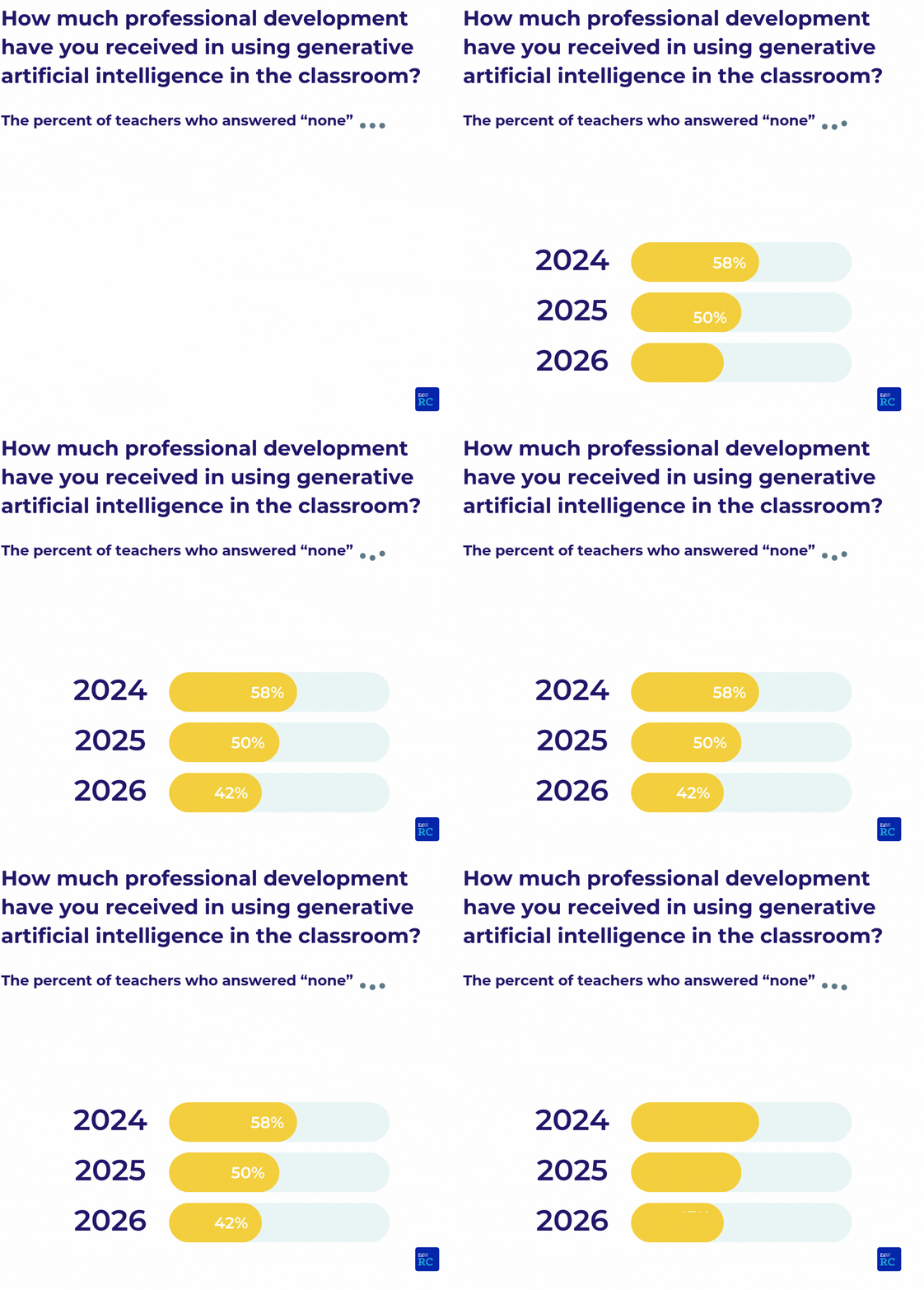
The EdWeek Research Center has conducted national surveys in recent years in which it has asked K-12 teachers how much PD they’ve had on AI.
In October 2024, almost 60% responded that they’d received no such training. By the fall of 2025, the percentage of K-12 teachers who reported receiving no training on AI dropped to 50%, while 14% said they’d had multiple sessions and 5% reported receiving ongoing training.
This past winter, in a new survey, the percentage of teachers reporting that they’d received no training on using generative AI in the classroom stood at 42%, with 22% reporting that they’d received multiple training sessions and 9% reporting ongoing training on the subject.
DATA SOURCE: EdWeek Research Center surveys, 2024-26
Even as these efforts ramp up, most teachers’ knowledge and comfort level with AI likely will remain well behind that of their current students (especially those in high school) and recent graduates. While students use generative AI for schoolwork and more colleges offer AI-related degrees, many schools are just starting to provide AI training to teachers.
Some haven’t even begun.
The need to move beyond teaching AI’s ‘efficiencies’
But as AI gains an ever-stronger foothold in K-12 education, some administrators sense the urgency in getting teachers on board.
“We understand that AI is most likely not ever going to go away. So we have to not only empower teachers with this tool,” said Anthony Salutari Jr., the principal of Daniel Hand High School in Madison, Conn., and the 2026 state High School Principal of the Year. “Teaching students how to use AI appropriately and, even more importantly, when to use AI, is our responsibility.”
Salutari’s administrative team last year began introducing teachers to basic ways they could use AI to assist them in their jobs—planning and developing lessons, scheduling, writing emails to parents. He admits that moving beyond training in AI as an “efficiency tool” to one that teachers can incorporate into teaching and learning has been more of a challenge.
That’s not uncommon, according to Jessica Garner, managing director of innovative learning at ISTE+ASCD, a professional development organization focused on the use of technology and curriculum in K-12 schools. And it’s likely why many schools don’t move past the basics when it comes to training teachers on AI.
But Garner challenges schools to provide PD on AI that goes beyond the basics and gets teachers to grapple with questions like: How do we use AI to differentiate instruction for students? How can AI help teachers do a process-based assessment, looking at kids’ thinking along the way?
“We can’t stop with efficiencies,” she said. “We still have a great need for educators knowing good use of AI for the purpose of teaching and learning.”
Getting reluctant teachers on board
Training teachers on the complex capabilities of AI-assisted teaching is challenging on its own. It also requires teachers’ buy-in, and not all teachers are open to it.
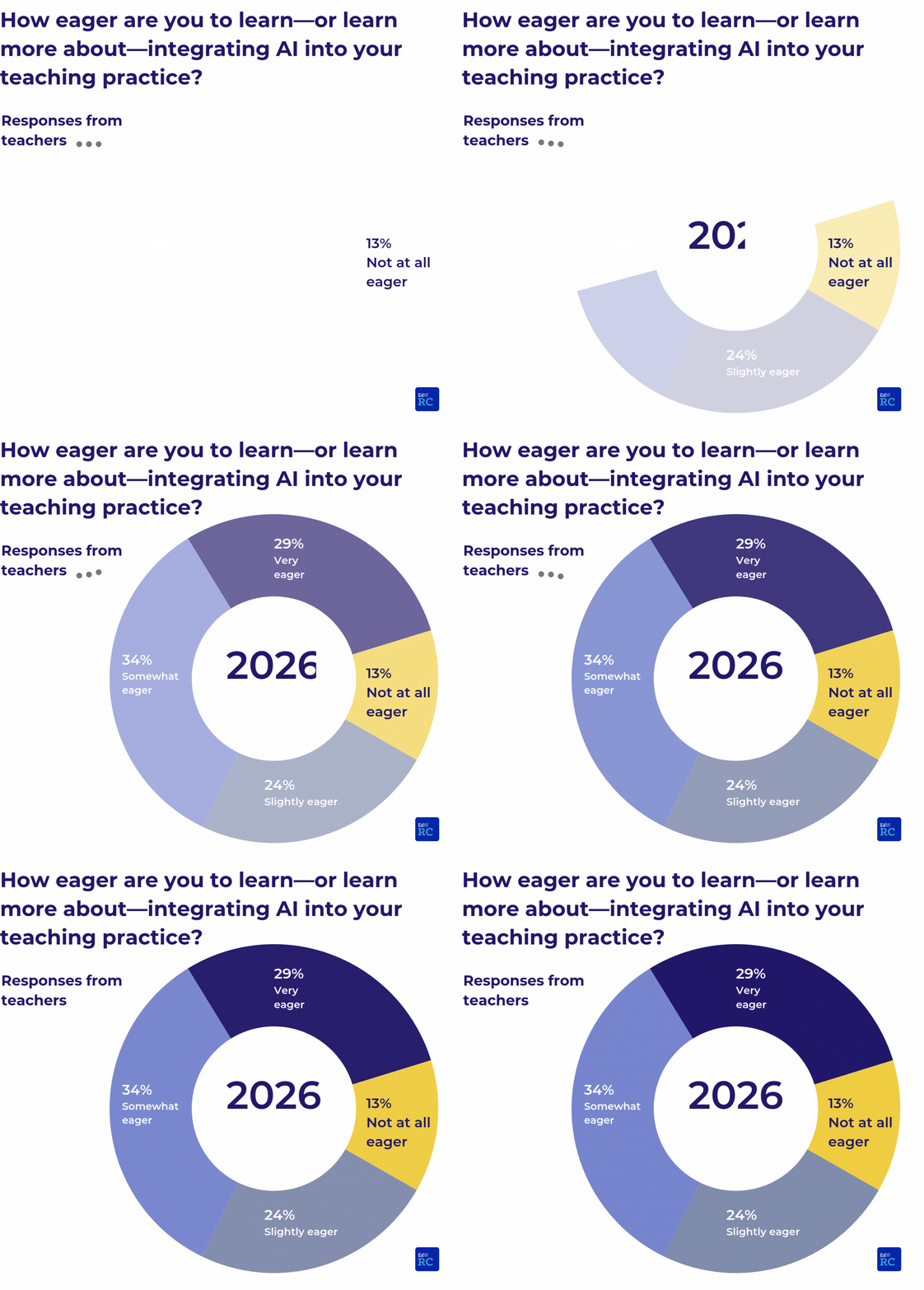
In a national survey of 651 teachers conducted in February and March, the EdWeek Research Center posed this question to teachers: How eager are you to learn—or learn more about—integrating AI into your teaching practice?
Thirteen percent responded “not at all”; 24% responded “slightly.”
DATA SOURCE: EdWeek Research Center nationally representative February-March 2026 survey of 113 district leaders, 112 school leaders, and 651 teachers
Similarly, an EdWeek Research Center survey last summer found educators divided on whether AI will be good or bad for teaching and learning in the next five years. Forty-seven percent said it will have a negative impact, and 43% said it will be positive.
Teachers’ reluctance around AI stems in part from a lack of strong guidance on the topic from leadership, according to experts.
“Without a clear stance on AI, confusion reigns. Schools need clear guidelines on AI use for student work: what’s allowed, what’s not, and how and why to use AI across curricula. Teachers must be part of that process, as each discipline prompts different questions around AI use. Without clear guidance, schools will continue to struggle,” Michael Horn, a lecturer at the Harvard Graduate School of Education and co-host of the Future U podcast, told EdWeek Opinion contributor Rick Hess earlier this year.
ISTE’s Garner agrees. “Administrators need to make sure they’re crafting the right messages right now,” she said.
Salutari, the Connecticut principal, keeps his message about AI-related training student-centric to bring reluctant teachers on board.
“I do think framing it as preparing our students for the future has really helped,” he said.

Data analysis for this article was provided by the EdWeek Research Center. Learn more about the center’s work.


