School Climate & Safety

Guidance Urges Input on ‘Dangerous Schools’ Definitions

By Erik W. Robelen — June 09, 2004 3 min read
  • Save to favorites
  • Print

The Department of Education is urging states to seek advice from parents and other community members when defining “persistently dangerous” schools under federal law, and to “review and revise” those definitions every year to make them more reflective of the actual threats students may face, according to new federal guidance.

The document, issued last month, was praised by key House Republicans who had raised concerns about the lax criteria they said most states had developed to meet a mandate that students in such schools be allowed public school choice. Last year, under that provision of the No Child Left Behind Act, only four states reported having any persistently dangerous schools, for a total of 38 out of some 91,000 public schools nationwide. (“Persistent Analysis,” Federal File, Oct. 22, 2003.)

“The guidelines ... should help states do a more effective job of implementing this requirement, and should in turn help more parents get the information they deserve about the safety of their children,” Rep. John A. Boehner, R-Ohio, the chairman of the House Education and the Workforce Committee, said in a press release.

But the operating phrase in the guidance, which updates a 2002 version, appears to be “strongly encourage,” as states have great leeway in how they implement the federal mandate.

Under the No Child Left Behind Act, each state was required to define persistently dangerous and identify schools that met the criteria. Districts must allow students in such schools to transfer to a safer public school in the system. The law also says a student who is the victim of a violent crime must be allowed to transfer.

Data Sources

The new federal guidance says that when a state reviews its definition, it should collaborate not only with school district representatives, as the law spells out, but also with “parents and other community members.”

In addition, the document offers advice on the types of data states may use.

While recognizing that states were “initially limited by the data they were already collecting” and had available, the department notes that “it is possible to utilize data from other sources, including referrals to the juvenile courts and reports by law-enforcement personnel, including school resource officers.” The department says many state definitions focus on suspension and expulsion data, and it urges states to also use data on offenses even when the perpetrator is not apprehended and disciplined.

The guidance makes clear that districts may not reclassify violent incidents as less serious and therefore not subject to reporting for purposes of identifying a school as persistently dangerous.

Rep. Marilyn Musgrave, R-Colo., who chaired a field hearing on the unsafe-schools policy last fall, said she was pleased by the revised guidelines.

“The increase in parental involvement in determining what constitutes persistently dangerous and keeping unsafe incidents from being reclassified are particularly critical in keeping our children safe in taxpayer-funded public schools,” she said.

Reps. Musgrave and Boehner were joined by 38 other House Republicans in writing to Secretary of Education Rod Paige last fall urging the department to give states more specific guidance on how to implement the choice policy for unsafe schools.

Limited Federal Role

Deputy Secretary of Education Eugene W. Hickok expressed frustration with the definitions crafted by many states.

“In far too many states, [officials] have chosen a way to define persistently dangerous schools so they don’t have any, and that’s ludicrous,” he said.

Mr. Hickok cautioned that the federal government has little influence on the matter.

“The law doesn’t give us sign-off on the definitions,” he said.

William L. Lassiter, a school safety specialist with North Carolina’s juvenile justice agency, said his state was reviewing its definition of persistently dangerous.

A North Carolina school now may be identified as dangerous if, for two straight years, five or more criminal offenses were committed per 1,000 students. But before a school is officially labeled, the state allows for an appeals process. Twenty-seven schools were placed on a “watch list” last year for meeting the criteria for one academic year.

North Carolina may not heed all the federal advice. For example, the guidance urges states to use just one year of data when identifying schools. But Mr. Lassiter suggested it was unlikely his state would make such a switch.

“If you really look at what the legislation says,” he noted, “it says persistently dangerous. To us, that means more than one year.”

A version of this article appeared in the June 09, 2004 edition of Education Week as Guidance Urges Input on ‘Dangerous Schools’ Definitions

Events

This content is provided by our sponsor. It is not written by and does not necessarily reflect the views of Education Week's editorial staff.
Sponsor
College & Workforce Readiness Webinar
From Exposure to Experience: Designing Accessible Work-Based Learning
Learn how schools can create meaningful experiences that help every student build skills, connections, and a clearer path to their future.
Content provided by Project Lead The Way
This content is provided by our sponsor. It is not written by and does not necessarily reflect the views of Education Week's editorial staff.
Sponsor
School & District Management Webinar
A Tale of Two School Districts: Forecasting Enrollment
Forecasting enrollment is hard. Here’s how two different districts are navigating times of change with data that considers the whole picture.
Content provided by Zonda Education
Reading & Literacy K-12 Essentials Forum Strategies to Create a Culture of Reading in Schools
Join this free virtual event to learn how teachers and school district leaders ensure students are reading enough.

EdWeek Top School Jobs

Teacher Jobs
Search over ten thousand teaching jobs nationwide — elementary, middle, high school and more.
View Jobs
Principal Jobs
Find hundreds of jobs for principals, assistant principals, and other school leadership roles.
View Jobs
Administrator Jobs
Over a thousand district-level jobs: superintendents, directors, more.
View Jobs
Support Staff Jobs
Search thousands of jobs, from paraprofessionals to counselors and more.
View Jobs

Read Next

School Climate & Safety Opinion Am I Brave Enough to Die for My Students?
An unspoken fear haunts educators in the era of school shootings. It’s time we talk about it.
Bridget Farr
•
4 min read
Illustration of a large silhouette of a teacher and a group of children on the right. A door with a shadowed figure peering through the window is in the left of the frame.
Illustration by Vanessa Solis/Education Week + Canva
School Climate & Safety A Shooting Strikes an Elementary School. Some Doubt Policy Change Will Follow
Tragedies like the one in Bend, Ore., draw public outcry, but typically not swift change on school safety.
5 min read
Children place flowers at a makeshift memorial outside Silver Rail Elementary in Bend, Ore., Friday, Oct. 16, 2026, a day after a deadly shooting.
Children place flowers at a makeshift memorial outside Silver Rail Elementary in Bend, Ore., Friday, Oct. 16, 2026, a day after a deadly shooting. The child victims, ages 5, 8, and 11, include the youngest person killed in a school shooting since Education Week began<a href="https://www-edweek-org.ezproxy.baylor.edu/leadership/school-shootings-this-year-how-many-and-where/2026/01" target="_blank" link-data="{&quot;cms.site.owner&quot;:{&quot;_ref&quot;:&quot;00000173-0561-d1f0-a17f-adef4bee0000&quot;,&quot;_type&quot;:&quot;ae3387cc-b875-31b7-b82d-63fd8d758c20&quot;},&quot;cms.content.publishDate&quot;:1792177418426,&quot;cms.content.publishUser&quot;:{&quot;_ref&quot;:&quot;00000180-d7b2-d193-a1b2-dfbba3aa0001&quot;,&quot;_type&quot;:&quot;6aa69ae1-35be-30dc-87e9-410da9e1cdcc&quot;},&quot;cms.content.updateDate&quot;:1792177418426,&quot;cms.content.updateUser&quot;:{&quot;_ref&quot;:&quot;00000180-d7b2-d193-a1b2-dfbba3aa0001&quot;,&quot;_type&quot;:&quot;6aa69ae1-35be-30dc-87e9-410da9e1cdcc&quot;},&quot;link&quot;:{&quot;disableUtmTracking&quot;:false,&quot;target&quot;:&quot;NEW&quot;,&quot;attributes&quot;:[],&quot;url&quot;:&quot;https://www-edweek-org.ezproxy.baylor.edu/leadership/school-shootings-this-year-how-many-and-where/2026/01&quot;,&quot;_id&quot;:&quot;000001a1-4619-d1d1-a3f3-f77b151b0000&quot;,&quot;_type&quot;:&quot;ff658216-e70f-39d0-b660-bdfe57a5599a&quot;},&quot;linkText&quot;:&quot; tracking these incidents&quot;,&quot;theme.brightspot-theme-default.:core:enhancement:Enhancement.hbs.enhancementAlignment&quot;:null,&quot;theme.brightspot-theme-default.:core:link:Link.hbs._template&quot;:null,&quot;theme.brightspot-theme-default.:core:link:Link.hbs.type&quot;:null,&quot;theme.brightspot-theme-default.:core:link:Link.hbs._preset&quot;:null,&quot;theme.brightspot-theme-default.:core:enhancement:Enhancement.hbs._preset&quot;:null,&quot;_id&quot;:&quot;000001a1-4619-d1d1-a3f3-f77b14b10001&quot;,&quot;_type&quot;:&quot;809caec9-30e2-3666-8b71-b32ddbffc288&quot;}"> </a>tracking those incidents eight years ago.
Joe Kline/AP
School Climate & Safety Three Children and Teacher Killed in Oregon Elementary School Shooting
Authorities in Bend, Ore., said the attacker gained entry by shooting through locked doors.
2 min read
Police tape is placed outside Silver Rail Elementary school following a shooting, on Oct. 15, 2026 in Bend, Ore.
Police tape is placed outside Silver Rail Elementary School following a shooting, on Oct. 15, 2026 in Bend, Ore. Authorities said an attacker shot through locked school doors to enter the building.
Joe Kline/AP
School Climate & Safety 4 Ways AI Data Centers Can Affect Schools
From health to productivity and finances, data centers could pose risks for students and schools.
3 min read
Carroll
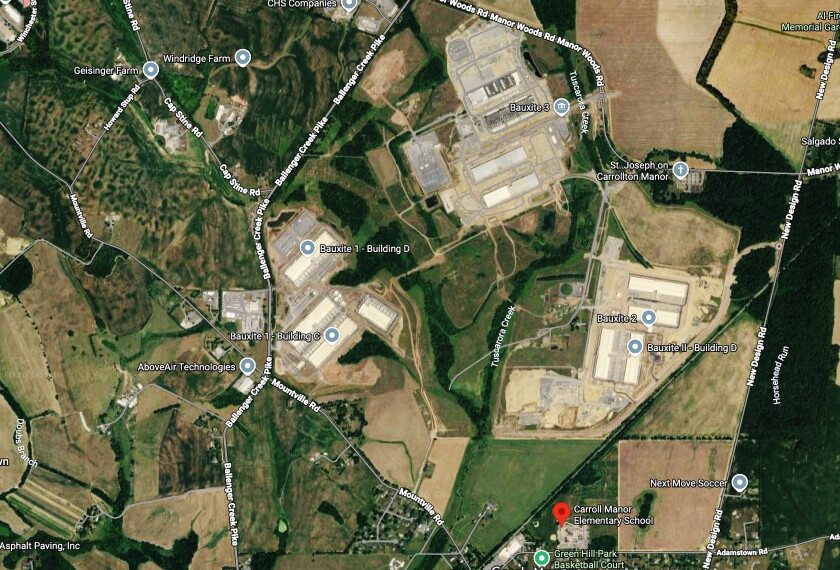
The Quantum Frederick Data Center Campus near the Carroll Manor Elementary School.
Map data ©2026 Google, Imagery ©2026