The largely unexpected results of the 2016 presidential race sent shock waves through many sectors of society. Pollsters and members of the news media have had to publicly come to terms with their failures to predict the outcome of the election—the win of President-elect Donald Trump—or to accurately capture the views of a large proportion of the American electorate. On the other hand, many academics in institutions of higher education have gone through a private process of reflection about how to make sense of evidence indicating their perspectives are out of sync with a large swath of the public.
While a majority of university-based researchers consider themselves politically progressive—this has been the case historically and in the present day—current political and ideological divides are having an impact on relationships between students and faculty in different and potentially more damaging ways than in the past. Discussions about the consequences of having so few conservative voices on university faculties are not new, but this election brought to light the degree to which academics have been operating in echo chambers.
Explore the geographic distribution of 2017 RHSU Edu-Scholars concentrations and the political composition of their universities’ faculty.
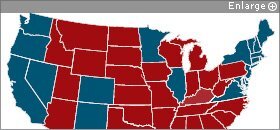
Source: Mitchell Langbert, Anthony J. Quain, and Daniel B. Klein (Econ Journal Watch, 2016); Associated Press
Because humans have a natural desire to associate with like-minded people, it is no surprise that researchers tend to collaborate with colleagues who share their worldviews and are similarly motivated to study the same empirical questions. But if the job of education researchers (of whom I am one) is to produce the most rigorous, policy-relevant research possible, we are limiting ourselves by staying in our comfort zone.
This harms the quality of our work. The recent emphasis in higher education on interdisciplinary, multi-method research has not included a similar push for the inclusion of multiple ideological perspectives. The tendency to work with scholars who concur on political and policy-related questions contradicts evidence about the value of diverse perspectives for improved decisionmaking.
For more in this package, please visit:
Our society also suffers from a lack of examples inside and outside the academy for how to engage people from across the ideological spectrum in constructive research and policy debates. Publicly engaged researchers are uniquely poised to leverage their platforms—such as academic publications, conference panels, public-speaking events, Twitter, and blogposts—to model the kind of productive dialogue that used to take place decades ago on the floor of the U.S. Senate, in television roundtables, and in university lecture halls. Such exchanges, in which ideas were tested and challenged on merits, not political grounds, can serve to strengthen policy proposals and opportunities for collaboration with colleagues from across the aisle.
This table lists the top 10 junior scholars who have not yet received tenure, according to the 2017 RHSU Edu-Scholar Public Influence Rankings.

President-elect Trump’s nomination of Betsy DeVos, a long-standing advocate of school vouchers and limited regulation of charter schools, for secretary of education is a telling example of both the dialogue that research and practice stand to benefit from and the ideological clashes that are distracting us.
A small cadre of scholars responded to the announcement of DeVos’ selection by engaging in highly public, evidenced-based discussions about the impacts of charter schools and voucher programs. At the same time, other educators and advocates seized the spotlight on charter schools and voucher programs to advance purely ideological positions for or against such policies. The cacophony of voices too easily drowns out a reasoned exchange of ideas, and the power of informed debates to positively influence policy and public opinion gets diluted.
The moment is ripe for institutions of higher education and their researchers to invest in ways to better fulfill important societal functions as bastions of civil debate and laboratories for well-balanced peer-reviewed research.
To do so, universities should create formal opportunities for scholars of diverse methodological, disciplinary, and ideological perspectives to engage with each other’s work and to model how respectful exchanges and debates can occur. This could happen, for example, through regularly scheduled roundtables, reading groups, or incentives for faculty members who might have little reason to interact to co-develop and co-teach courses.
Linda Darling-Hammond, Diane Ravitch, and Gloria Ladson-Billings took the top three spots in the 2017 RHSU Edu-Scholar Public Influence Rankings. Click on the chart below to learn who took the other two spots. (The affiliations cited are drawn from the scholars’ CVs.)

Faculty members should also commit to ensuring that their classroom climates are hospitable to all students. This means being cognizant of behaviors that may silence students whose opinions do not conform to the majority (often progressive) views. Faculty members should also facilitate debate among students in a supportive environment.
Finally, all researchers should engage in reflexivity: that is, work to identify the ideological underpinnings of their own work. Understanding how personal ideologies may influence approaches to research—what questions the authors ask, the theoretical foundations of their work, and the methods they employ—can be a starting point for new ways to be a publicly engaged scholar. Such self-awareness may prompt researchers and policymakers alike to identify their own blind spots and pursue professional relationships that advance their knowledge of alternate viewpoints.


