
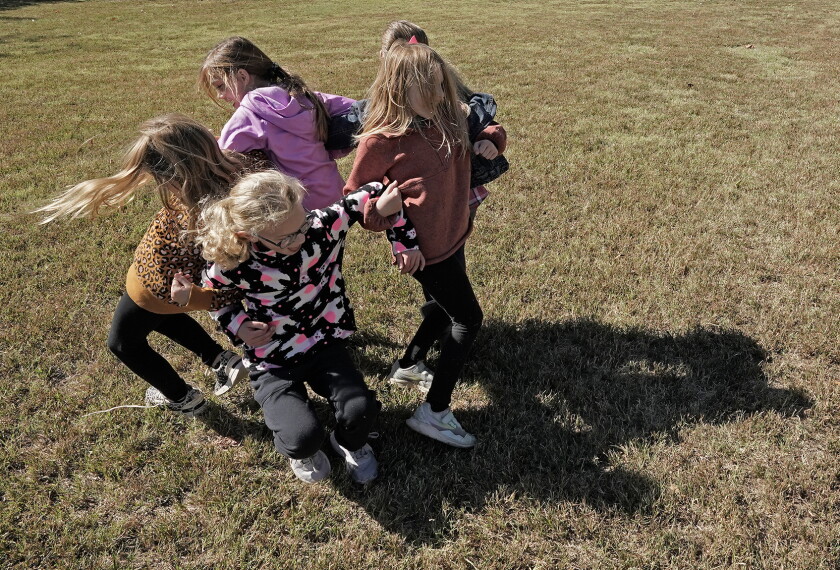
Kids of all ages need regular breaks from the classroom. Common sense tells us this, and research confirms it. But in many school districts nationwide, recess is losing its place as an integral part of the school day—oftentimes edged out by increasing time spent on academics.
Elementary school students in the 1970s spent, on average, between 90 and 120 minutes at recess daily, compared with just 20 to 30 minutes today, according to data from the Centers for Disease Control and Prevention. Some get none.
Shortchanging recess is counterintuitive, say childhood education experts, who argue that students need the break that recess provides to rest, recharge, and learn life skills that can’t be found in a textbook.

But, just as with academics, some recess periods work better than others. As Rebecca London, a community-engagement researcher and professor of sociology at the University of California, Santa Cruz, points out, “You can’t just throw 400 kids out on a play yard for 20 minutes with a couple of balls and expect it to go well.”
The following downloadable provides nine evidence-based strategies for positive recess experiences.


