Opinion
College & Workforce Readiness Opinion

How Do I Prepare My Students for Jobs That May Soon Disappear?

By A.M. Hangan — September 12, 2017 2 min read
  • Save to favorites
  • Print

I’ve been a teacher for 20 years. On day one of each new school year, the first conversation I hold with my students is about education. I start by saying, “Education is important; it will prepare you for a career.” I choose this topic to instill hope in my students that all their work in school will pay off.

American schools have cycled millions of students through classrooms into the workforce. But more important, schools are a doorway for opening up young minds to a world of possibilities.

As companies increasingly introduce digital machines into production, workers must hone new skills for the tools of industry. While the speed of school systems to harmonize instruction to a changing economy is often glacial, teachers and education leaders have found creative ways to adjust. New programs that support science and math, computer science, and robot design are sprouting up in innovative high schools and classrooms across the country.

BRIC ARCHIVE

Although a drumbeat of criticism would have you believe that high schools are “failing” to prepare students for the workplace, graduates are finding jobs. According to the U.S. Bureau of Labor Statistics, the unemployment rate for high school graduates declined from 11 percent in 2009 to 7.7 percent in January of this year. While this was still above the national average of 4.8 percent in January, the downward trend gives a reason to be optimistic about the ability of high schools to prepare students to get a job in the 21st-century economy.

Over the last year or so, there’s been an acceleration in the stream of headlines in the business press tracking the growing trend of automation and robots doing tasks once carried out by people. The recent purchase of Whole Foods by the mega-online retailer Amazon, renowned for its automated warehousesand workerless grocery stores, has awakened fresh concerns over the elimination of entire job categories and a growing army of unemployable people.

Whether these concerns prove well-founded remains to be seen, but the acquisition underscores the powerful headwinds workers will face in the near future. According to a 2015 study from Citi Research and the Oxford Martin School in 2015, up to 47 percent of current U.S. employment is at risk of being automated.

With that fact in mind, I struggled with what I should tell my students as this new school year began. While I am professionally bound to encourage students to strive for a career, I am ethically obligated to explain the challenges they may face in being gainfully employed.

On the first day of class, I had my annual conversation with my students about the importance of an education to reach their career goals. However, I am already anticipating what I will say if one of my new students asks me, “Mr. Hangan, what’s a good career I should pursue?” As Amazon sets a new standard for the workplace by automating more work in the future, I will just have to say, “Hmmm, that’s a great question.”

Related Tags:

A version of this article appeared in the September 13, 2017 edition of Education Week as How Do We Prepare Students For Jobs That May Soon Disappear?

Events

This content is provided by our sponsor. It is not written by and does not necessarily reflect the views of Education Week's editorial staff.
Sponsor
Special Education Webinar
Special Education Disputes & Rising Costs: Protecting Your District
Special education costs and risks are rising. Learn how stronger IEP and Medicaid processes help districts protect funding and compliance.
Content provided by Relay
This content is provided by our sponsor. It is not written by and does not necessarily reflect the views of Education Week's editorial staff.
Sponsor
Personalized Learning Webinar
Differentiation That Delivers: Proven Practices From High-Growth Districts
Make every minute count. Proven strategies from educators and leaders driving real student growth. Save your seat!
Content provided by i-Ready, Curriculum Associates
This content is provided by our sponsor. It is not written by and does not necessarily reflect the views of Education Week's editorial staff.
Sponsor
College & Workforce Readiness Webinar
From Exposure to Experience: Designing Accessible Work-Based Learning
Learn how schools can create meaningful experiences that help every student build skills, connections, and a clearer path to their future.
Content provided by Project Lead The Way

EdWeek Top School Jobs

Teacher Jobs
Search over ten thousand teaching jobs nationwide — elementary, middle, high school and more.
View Jobs
Principal Jobs
Find hundreds of jobs for principals, assistant principals, and other school leadership roles.
View Jobs
Administrator Jobs
Over a thousand district-level jobs: superintendents, directors, more.
View Jobs
Support Staff Jobs
Search thousands of jobs, from paraprofessionals to counselors and more.
View Jobs

Read Next

College & Workforce Readiness France Promises to Replace Its University Admissions After Riots, Mass Arrests
The concessions target the school grievances that helped ignite the unrest.
4 min read
A person holds a French national flag during a protest against under-resourced schools in Paris on Thursday, Oct. 8, 2026.
Aurelien Morissard/AP
College & Workforce Readiness Q&A Reading, Writing, and Math Skills Are Top Priorities in This CTE Program
How these teachers are connecting the dots between academic and technical skills.
4 min read
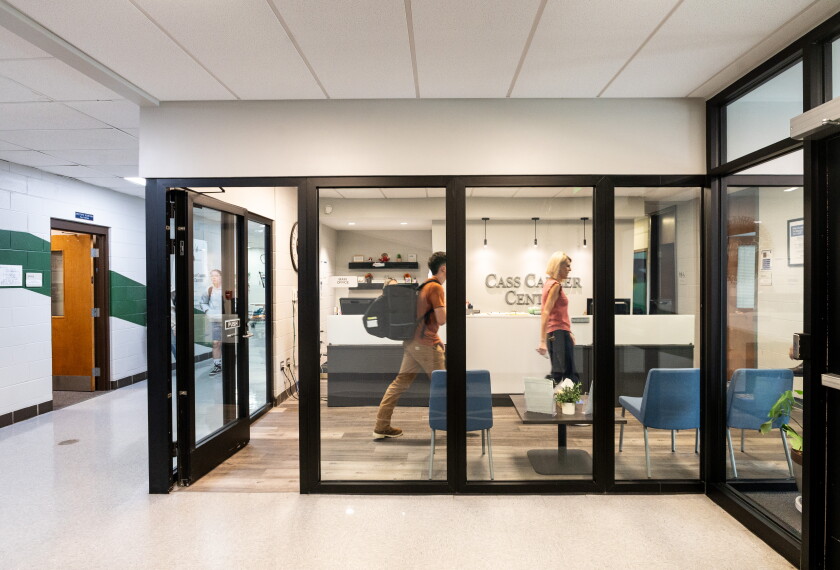
Cass Career Center
Assistant Director, Nicole Tews, walks a student through the administration office at the Cass Career Center in Harrisonville, Mo., on September 29, 2026. The center has a math and an English teacher who are integrated into students' industry-specific career programs.
Melissa Lukenbaugh for Education Week
College & Workforce Readiness Q&A Dual Enrollment Is Surging. Here's How High Schools Can Get it Right
More than 3 million high school students took a college course last year.
3 min read
Macomb Community College's South Campus in Warren, Mich. off of 12 Mile Road on Oct. 15, 2026.
Macomb Community College's South Campus in Warren, Mich., is shown on Oct. 15, 2026. In Michigan, 16 percent of community college students are high schoolers. Nationwide, dual enrollment now tops 3 million students.
Miles Oates/mlive.com via TNS
This content is provided by our sponsor. It is not written by and does not necessarily reflect the views of Education Week's editorial staff.
Sponsor
College & Workforce Readiness Whitepaper
6 Steps to Build a Future-Ready Graduate
Turn your vision into measurable student success with a 6-step framework that tracks future-ready competencies across every classroom.
Content provided by Otus
