Classroom Technology

What Girls Say Social Media Is Doing to Their Sleep and Mental Health

By Alyson Klein — March 30, 2023 3 min read
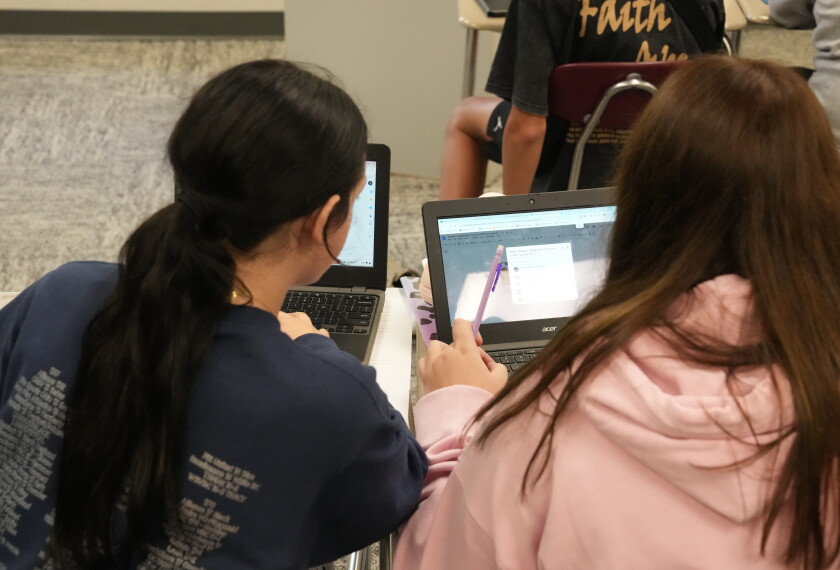
Conceptual image of a young person engaged in social media.
  • Save to favorites
  • Print

Many teen girls say they spend much more time on social media—especially TikTok—than they intend to, interfering with their sleep, and in some cases their mental health, according to a survey released March 30 by Common Sense Media, a research and advocacy organization that studies the impact of technology on young people.

Almost half of teenage girls surveyed said they are addicted to TikTok or spend more time on the social media video platform than they intend to at least once a week. About a third of girls said the same of Snapchat, Instagram, and YouTube.

“Teens’ relationships with social media are complicated. They know that it isn’t always the best for them, but it plays a huge role in how they experience the world and build and support their relationships,” said James Steyer, the CEO and founder of Common Sense, in a statement included with the report. “It’s time to center youth voices when we discuss the connections between social media and mental health.”

I felt like my mental health was not doing well because I was too commonly comparing myself to others

On average, teen girls who use TikTok spend more than two and a half hours a day on the platform, and those who use YouTube spend a similar amount of time; for Snapchat users, it’s about two hours; and for Instagram users, it’s about 90 minutes a day.

“I felt the app wasted my time, and it just made me more predisposed to get sucked into my phone (Snap, TikTok, etc.) for prolonged periods of time,” one 15-year-old Snapchat user told researchers.

The survey of nearly 1,400 girls ages 11 to 15 was conducted in November and December of last year.

One in four girls say that TikTok interferes with their sleep at least once a week, while nearly a quarter say it gets in the way of sleep daily. By comparison, a little less than a third of girls surveyed said that Instagram, Snapchat, or YouTube each interfere with sleep at least once a week.

Overall, girls have a mixed view of social media’s impact on their lives. For instance, 43 percent of girls feel that TikTok is a generally positive experience, while a little over a quarter say it’s mostly negative. About a quarter of teens say that Snapchat is a mostly negative force, while 19 percent said the same of Instagram. By contrast, 38 percent of teens see Instagram as generally positive, while 32 percent say the same of Snapchat.

What’s more, among girls with symptoms of moderate or severe depression, about 75 percent of those who use Instagram and 69 percent who use TikTok report finding “problematic suicide related content” at least once a month on these platforms.

“I felt like my mental health was not doing well because I was too commonly comparing myself to others,” a 13-year-old TikTok user told researchers.

Though more than half of teens reported finding mental health resources on Instagram, Snapchat, TikTok, and YouTube, a higher percentage of teens—63 percent—found mental health resources in “real life” than on any social media platform.

Should social media platforms be held accountable for damage to student mental health?


The report comes as lawmakers are increasingly making connections between students’ worsening mental health and their preoccupation with social media.

Seattle Public Schools, which educates over 50,000 students, is suing the companies that own TikTok, Instagram, YouTube, and Snapchat, claiming these platforms are a major force behind a decline in student well-being.

Social media companies have designed addictive products that keep teens scrolling and swiping, even as it is detrimental to their well-being, the district contends. Seattle has had to hire additional personnel to address the crisis this has created among students. In response, social media companies have said they are making improvements to their services to protect children.

At the same time, Congress and the Biden administration are considering banning TikTok, which is owned by the Chinese company ByteDance, largely because of national security concerns. Still, the platform’s impact on teen mental health was a recurring theme of a recent hearing at which Shou Chew, TikTok’s CEO, testified.

“The more time that middle and high schoolers spend on social media, the evidence is the more likely they are to experience depression and anxiety,” said Rep. John Sarbanes, D-Md., during the hearing.

Events

This content is provided by our sponsor. It is not written by and does not necessarily reflect the views of Education Week's editorial staff.
Sponsor
Recruitment & Retention Webinar
Hiring, Retention, and Fill Rates: A Data-Driven Sub Strategy
Explore what keeps substitutes coming back and hear how one district rebuilt its substitute hiring process and improved its fill rate.
Content provided by Frontline Education
Early Childhood K-12 Essentials Forum Early Childhood Education: Building Essential Skills for Success
Join this free virtual event to examine the biggest challenges in supporting young children, from preschool through elementary school. 
This content is provided by our sponsor. It is not written by and does not necessarily reflect the views of Education Week's editorial staff.
Sponsor
Student Absenteeism Webinar
Attendance Isn't an Attendance Problem
Boost attendance by strengthening relationships, belonging, and support with practical strategies from Doug Fisher & Nancy Frey.
Content provided by Corwin

EdWeek Top School Jobs

Teacher Jobs
Search over ten thousand teaching jobs nationwide — elementary, middle, high school and more.
View Jobs
Principal Jobs
Find hundreds of jobs for principals, assistant principals, and other school leadership roles.
View Jobs
Administrator Jobs
Over a thousand district-level jobs: superintendents, directors, more.
View Jobs
Support Staff Jobs
Search thousands of jobs, from paraprofessionals to counselors and more.
View Jobs

Read Next

Classroom Technology Q&A Facing 'Techlash,' How Should Schools Talk to Parents About Tech Use?
A school communications expert explains how schools should approach their messaging around tech.
5 min read
MEAD, CO - AUGUST 18: Parents watch and and take photos of their kids as they enter the school during their first day of class at the Big Sky PK-8 School in Mead on Aug. 18, 2026.
Parents watch their kids as they enter the school on the first day of class at the Big Sky PK-8 School in Mead, Colo., on Aug. 18, 2026. As schools face growing backlash from parents over their use of educational technology, a school communications professional has some pointers on how schools can communicate with parents about how they're using technology.
Joel Solis/MediaNews Group/Boulder Daily Camera via Getty Images
Classroom Technology It's About Quality Tech Use, Not Screen Time, Trump's Top K-12 Official Argues
Trump administration's top K-12 official urges educators to focus on whether ed tech is effective.
5 min read
Assistant Secretary for the Office of Elementary and Secondary Education Kirsten Baesler speaks during the National Forum on Education Policy in Washington, DC on Wednesday July 8, 2026.
Assistant Secretary of Elementary and Secondary Education Kirsten Baesler speaks during the National Forum on Education Policy in Washington on Wednesday, July 8, 2026. Baesler urged educators to ensure ed tech is delivering results for students, rather than focus single-mindedly on the amount of time students are spending on screens in class.
Demetrius Freeman for Education Week
Classroom Technology These Kids Are Learning Without Tech in a District That Gives Out Devices to All
Some parents in this city opted their children out of school-issued devices.
Claire Bryan, The Seattle Times
10 min read
Imran, left, confers with his math partner Nataly as the fifth graders solve a problem using base-10 rods at Hawthorne Elementary School, Tuesday, Jan. 24, 2023 , in Seattle .
Imran, left, confers with his math partner Nataly as the 5th graders solve a problem using base-10 rods at Hawthorne Elementary School in Seattle on Jan. 24, 2023. Some parents in the city, which issues devices to all students, have opted their children out of school-issued technology.
Ken Lambert/Seattle Times via TNS
Classroom Technology Q&A Why a 'Blunt Force' Approach to Screen Time May Be Problematic
District and state leaders should avoid one-size-fits-all mandates on screen time, expert argues.
3 min read
Ninth-graders Charley Mays, left, and Grace Coleman work on iPads during an honors physical science class at Minnetonka High School on Oct. 30, 2019 in Minnetonka, Minnesota .
Ninth-graders Charley Mays, left, and Grace Coleman work on iPads during an honors physical science class at Minnetonka High School on Oct. 30, 2019 in Minnetonka, Minn. Some experts caution schools not to go too far in dialing back the use of classroom technologies, a trend called the "techlash" that is driven by concerns about the overuse of technology in schools.
Jerry Holt/The Minnesota Star Tribune via TNS