Opinion
School Climate & Safety Opinion

Buildings, Not Drills, Hold Key to Disaster-Proof Schools

By Nancy Bailey, Barry Welliver & Edward Wolf — July 18, 2011 4 min read
Survivors and relatives pray for dead and missing victims of the Okawa Elementary school in Ishinomaki, Japan, earlier this month. The school was destroyed by the 2011 tsunami; 74 of 108 students and 10 of 13 teachers and staff at the facility were killed.
  • Save to favorites
  • Print

The year 2011 capped a cruel winter with a hit parade of nature’s turbulent extremes. Japan’s earthquake and tsunami, the cresting Mississippi, wildfires in Arizona and Texas, and deadly tornadoes from Tuscaloosa, Ala., to Joplin, Mo., served, each in its own way, as heartbreaking reminders of human vulnerability to natural disaster.

Schools answer vulnerability with preparedness, and for millions of American students that means safety drills. But such exercises fuel an unwarranted complacency when life-threatening hazards go unattended. Consider the Great Central U.S. ShakeOut.

On the last Thursday in April, at 10:15 a.m., more than 3 million students, educators, and other citizens across an 11-state region dropped to the floor, covered their heads, and held on to their desks for 60 seconds. The ShakeOut, an earthquake drill modeled on a California event and endorsed by the Obama administration, marked the bicentennial of the New Madrid, Mo., earthquakes, a swarm of temblors that shook a region—that includes parts of Illinois, Tennessee, and Arkansas with greater-than-magnitude-7 seismic force.

ShakeOut participants included tens of thousands of students in Memphis. Those students dropped, covered, and held on in aging buildings that have never been strengthened to withstand earthquake shaking. As school safety advocates in three cities whose public schools share those deficiencies, that disconnect disturbs us.

Isn’t it time for state legislators, who mandate school attendance, to sweep complacency aside and fix schools with deadly defects?"

The consensus expectation of all but a few seismologists is that a repeat of the New Madrid quakes would destroy many unreinforced buildings, trapping and killing occupants regardless of whether they followed safety procedures. If the risk is judged high enough to engage millions of participants in a multistate safety drill, isn’t it time for state legislators, who mandate school attendance, to sweep complacency aside and fix schools with deadly defects?

The Mid-South is not the only region facing this conundrum. Others include the rapidly growing Wasatch Front region in Utah, where the 240-mile Wasatch Fault may be girding for an earthquake of magnitude 7, and the Pacific Northwest, where the offshore Cascadia Fault could generate an earthquake and tsunami that would exceed the magnitude-9 quake that shook Japan earlier this year.

The Mid-South, the Wasatch Front, and the Pacific Northwest were each settled during an interval of relative seismic calm. In each region, public policy can scarcely keep up with scientists’ grasp of the risks. And in each one, hundreds of thousands of children attend classes in buildings not designed to protect them on the day that local faults decide to slip.

Utah has taken the first step to gauge the risk, using Federal Emergency Management Agency funds to survey 128 school buildings along the Wasatch Front with a “rapid visual screening” method designed to help prioritize safety investments. The survey turned up 77 buildings that needed a closer look, and of those, 46 are believed to be at high or very high risk of collapse. Utah’s Seismic Safety Commission urges expanding the survey to all of the state’s 1,085 K-12 school buildings. But state lawmakers, even in family-friendly Utah, have yet to take up the cause.

Oregon has gone further, completing a statewide survey of 2,186 school buildings, along with fire stations, police stations, and hospitals. The results raised eyebrows: The survey found that 1,018 school buildings, or 47 percent of all K-12 buildings examined, rated high or very high for risk of collapse in a strong earthquake. But efforts to fix risky schools have scarcely begun: A state grant program launched in 2009 and subsequently cut by 25 percent received $7.5 million in life support from legislators in 2011. A couple dozen schools will be fixed, but hundreds remain dangerous.

Memphis, meanwhile, has yet to acknowledge the risk faced by the 113,000 students who attend public schools in that city. The school district’s latest five-year capital plan does not mention the word “earthquake.” Local officials are not blind to the risk; the Hernando De Soto Bridge on I-40 has been strengthened to withstand earthquakes, and seismic retrofits to Memphis International Airport and area trauma centers are being considered. Public schools, apparently, just don’t count as “critical structures.”

We live on a restless earth, and we know a great deal about its danger zones. Throughout America, we locate neighborhoods and schools in those zones, but tend to allow an “it won’t happen here” mentality to prevail.

In too many communities, we persist in quixotic exercises, staging earthquake drills in classrooms that could pancake the day an actual earthquake strikes along one of our dangerous faults.

Drills like ShakeOut have a useful role. They raise awareness and impart knowledge that will save lives. But underdesigned buildings killed thousands of schoolchildren in Sichuan, China, in 2008 and in Haiti in 2010, and underdesigned buildings could kill children here in the United States.

We can’t prevent natural disasters, but we owe it to our children to fix or replace unfit schools that put them in harm’s way. The toll taken by nature’s extremes is largely our choice.

Events

Artificial Intelligence Webinar AI and 'Techlash' Are on a Collision Course. How Should Schools Respond?
Learn what strategies and tactics schools can develop to encourage smart and responsible AI use, while also enforcing tech guardrails.
This content is provided by our sponsor. It is not written by and does not necessarily reflect the views of Education Week's editorial staff.
Sponsor
Special Education Webinar
Special Education Disputes & Rising Costs: Protecting Your District
Special education costs and risks are rising. Learn how stronger IEP and Medicaid processes help districts protect funding and compliance.
Content provided by Relay
This content is provided by our sponsor. It is not written by and does not necessarily reflect the views of Education Week's editorial staff.
Sponsor
Personalized Learning Webinar
Differentiation That Delivers: Proven Practices From High-Growth Districts
Make every minute count. Proven strategies from educators and leaders driving real student growth. Save your seat!
Content provided by i-Ready, Curriculum Associates

EdWeek Top School Jobs

Teacher Jobs
Search over ten thousand teaching jobs nationwide — elementary, middle, high school and more.
View Jobs
Principal Jobs
Find hundreds of jobs for principals, assistant principals, and other school leadership roles.
View Jobs
Administrator Jobs
Over a thousand district-level jobs: superintendents, directors, more.
View Jobs
Support Staff Jobs
Search thousands of jobs, from paraprofessionals to counselors and more.
View Jobs

Read Next

School Climate & Safety A Shooting Strikes an Elementary School. Some Doubt Policy Change Will Follow
Tragedies like the one in Bend, Ore., draw public outcry, but typically not swift change on school safety.
5 min read
Children place flowers at a makeshift memorial outside Silver Rail Elementary in Bend, Ore., Friday, Oct. 16, 2026, a day after a deadly shooting.
Children place flowers at a makeshift memorial outside Silver Rail Elementary in Bend, Ore., Friday, Oct. 16, 2026, a day after a deadly shooting. The child victims, ages 5, 8, and 11, include the youngest person killed in a school shooting since Education Week began<a href="https://www-edweek-org.ezproxy.baylor.edu/leadership/school-shootings-this-year-how-many-and-where/2026/01" target="_blank" link-data="{&quot;cms.site.owner&quot;:{&quot;_ref&quot;:&quot;00000173-0561-d1f0-a17f-adef4bee0000&quot;,&quot;_type&quot;:&quot;ae3387cc-b875-31b7-b82d-63fd8d758c20&quot;},&quot;cms.content.publishDate&quot;:1792177418426,&quot;cms.content.publishUser&quot;:{&quot;_ref&quot;:&quot;00000180-d7b2-d193-a1b2-dfbba3aa0001&quot;,&quot;_type&quot;:&quot;6aa69ae1-35be-30dc-87e9-410da9e1cdcc&quot;},&quot;cms.content.updateDate&quot;:1792177418426,&quot;cms.content.updateUser&quot;:{&quot;_ref&quot;:&quot;00000180-d7b2-d193-a1b2-dfbba3aa0001&quot;,&quot;_type&quot;:&quot;6aa69ae1-35be-30dc-87e9-410da9e1cdcc&quot;},&quot;link&quot;:{&quot;disableUtmTracking&quot;:false,&quot;target&quot;:&quot;NEW&quot;,&quot;attributes&quot;:[],&quot;url&quot;:&quot;https://www-edweek-org.ezproxy.baylor.edu/leadership/school-shootings-this-year-how-many-and-where/2026/01&quot;,&quot;_id&quot;:&quot;000001a1-4619-d1d1-a3f3-f77b151b0000&quot;,&quot;_type&quot;:&quot;ff658216-e70f-39d0-b660-bdfe57a5599a&quot;},&quot;linkText&quot;:&quot; tracking these incidents&quot;,&quot;theme.brightspot-theme-default.:core:enhancement:Enhancement.hbs.enhancementAlignment&quot;:null,&quot;theme.brightspot-theme-default.:core:link:Link.hbs._template&quot;:null,&quot;theme.brightspot-theme-default.:core:link:Link.hbs.type&quot;:null,&quot;theme.brightspot-theme-default.:core:link:Link.hbs._preset&quot;:null,&quot;theme.brightspot-theme-default.:core:enhancement:Enhancement.hbs._preset&quot;:null,&quot;_id&quot;:&quot;000001a1-4619-d1d1-a3f3-f77b14b10001&quot;,&quot;_type&quot;:&quot;809caec9-30e2-3666-8b71-b32ddbffc288&quot;}"> </a>tracking those incidents eight years ago.
Joe Kline/AP
School Climate & Safety Three Children and Teacher Killed in Oregon Elementary School Shooting
Authorities in Bend, Ore., said the attacker gained entry by shooting through locked doors.
2 min read
Police tape is placed outside Silver Rail Elementary school following a shooting, on Oct. 15, 2026 in Bend, Ore.
Police tape is placed outside Silver Rail Elementary School following a shooting, on Oct. 15, 2026 in Bend, Ore. Authorities said an attacker shot through locked school doors to enter the building.
Joe Kline/AP
School Climate & Safety 4 Ways AI Data Centers Can Affect Schools
From health to productivity and finances, data centers could pose risks for students and schools.
3 min read
Carroll
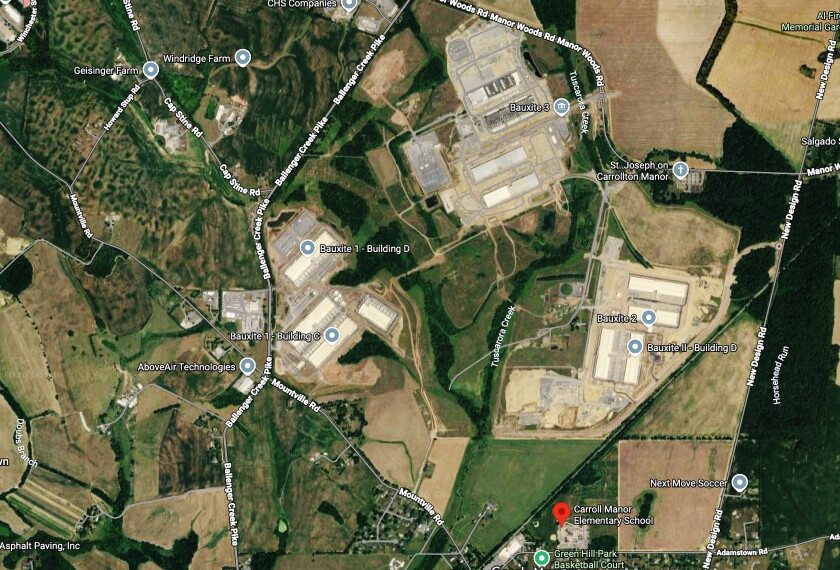
The Quantum Frederick Data Center Campus near the Carroll Manor Elementary School.
Map data ©2026 Google, Imagery ©2026
School Climate & Safety For Students Walking to School, the Route Can Be Deadly. What Can Make It Safer?
School districts, including New York City, have rolled out a number of strategies to reduce risks.
5 min read
A student leaving Greenspun Junior High School in Henderson, Nev., enters a car in the travel lane of Valle Verde Drive on Sept. 14, 2022. Pedestrian fatalities near schools are most likely to occur in the early morning and early evening hours, federal data show.
Rachel Aston/Las Vegas Review-Journal via TNS