
Classroom Technology

3 Tips for Using Tech to Meet All Students’ Needs

By Lauraine Langreo — June 25, 2024 2 min read
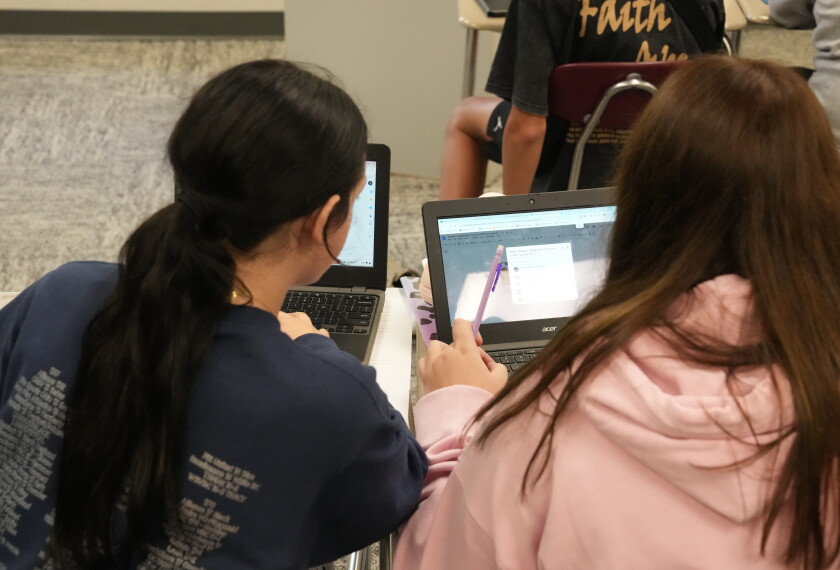
Photo of elementary school students using laptops in class.
  • Save to favorites
  • Print

The overall number of ed-tech tools districts are using is increasing, and many districts now have 1-to-1 computing programs.

Yet equitable technology access for all students still isn’t a reality, and educators don’t always use technology in ways that serve the needs of all students, experts said during a June 24 panel discussion at the International Society for Technology in Education conference here.

The panel explored technology’s role in fostering inclusive and equitable digital learning environments.

The panelists were Brittany Wade, Ed Farm’s senior manager of curriculum and assessment; Yaritza Villalba, an education coach for Samsung Education; Kimberly Niebauer, an elementary school teacher in Duval County schools in Florida; Stevie Frank, a technology integration specialist for Zionsville Community Schools in Indiana; and Renee Dawson, an ed-tech specialist for the Atlanta public schools.

Here are three important lessons for educators from the panel discussion.

1. Focus on building good pedagogical practices

To ensure that teachers are using technology in inclusive and equitable ways, the panelists underscored the importance of focusing on pedagogy.

“As we have seen, tools come and go,” Frank said. “But good pedagogical practices don’t.”

Start with the standards, with what students have to know by the end of the school year. And then figure out how they’re going to get there and what role technology plays in that, Frank recommended. And sometimes, she emphasized, technology doesn’t have a role.

2. Show teachers how to use the technology’s accessibility features

Access goes beyond having the software and the hardware, the panelists said.

“Without training, without intention, without truly empowering people to use technology in meaningful ways, you don’t really have access,” Wade said.

In her work training educators, Wade often hears them say, “Hey, I have all this stuff, but I don’t know how to use it.” Teachers ask her how to use the accessibility features and how to design lessons that are meaningful for all students.

“You have to start with going beyond the tool,” Wade said. Start with “that intentionality of how do we use it to meet the needs of every learner. How do we use it to let them see themselves?”

3. Make sure the technology works for the student with the most needs

The easiest way to make the classroom inclusive is to level the playing field by making sure the technology works for the student with the most needs, Dawson said. If it works for that student, she said, it’ll work for everybody in that classroom.

That could mean using tools that have accessibility features built in so teachers don’t have to reinvent the wheel, she said.

It takes time and practice to use these features, so teachers shouldn’t feel like they have to get it right the first time, the panelists said.

Creating an inclusive digital learning environment also means teaching all students how to use accessibility features, such as text-to-speech and live captions, even if they don’t need them, “because they might encounter someone who does,” Wade said.

Educators should also teach parents how to use these features, because they’re the ones who are at home with the students and need to know how to help with school work they have to do outside of regular school hours, Villalba said.

Related Tags:

Events

This content is provided by our sponsor. It is not written by and does not necessarily reflect the views of Education Week's editorial staff.
Sponsor
School Climate & Safety Webinar
There But Not Present: Rethinking Student Engagement
Learn how to recognize the early signs of disengagement and what the behavioral science reveals about which interventions actually work.
Content provided by Frontline Education
Teacher Preparation Webinar What Teacher Education Should Look Like in the Age of AI
Explore the current trends around the use of AI in teacher preparation and continuing education with data from the EdWeek Research Center.
English Learners Webinar How Can School Districts Better Support English Learners With Disabilities?
Join this webinar to hear recent findings from the EdWeek Research Center and discover practical strategies for improvement.

EdWeek Top School Jobs

Teacher Jobs
Search over ten thousand teaching jobs nationwide — elementary, middle, high school and more.
View Jobs
Principal Jobs
Find hundreds of jobs for principals, assistant principals, and other school leadership roles.
View Jobs
Administrator Jobs
Over a thousand district-level jobs: superintendents, directors, more.
View Jobs
Support Staff Jobs
Search thousands of jobs, from paraprofessionals to counselors and more.
View Jobs

Read Next

Classroom Technology Opinion The Big Flaw With Ed-Tech Tutoring Isn't Technological
Before focusing on the technology, we need to redesign the learning model, Michael Horn argues.
•
4 min read
The United States Capitol building as a bookcase filled with red, white, and blue policy books in a Washington DC landscape.
Luca D'Urbino for Education Week
Classroom Technology Q&A Students’ Tech Engagement Doesn’t Equal Learning, Psychologists Warn
A panel of psychologists shares recommendations for ensuring technology promotes meaningful learning.
6 min read
DSC03088
Students at a high school in Plymouth, Ohio work on how to properly prompt the Gemini AI app on Aug. 28, 2026. A new report of the American Psychological Association warns that student engagement with tech apps should not be conflated with benefits for learning.
Ruddy Roye for Education Week
Classroom Technology Q&A Facing 'Techlash,' How Should Schools Talk to Parents About Tech Use?
A school communications expert explains how schools should approach their messaging around tech.
5 min read
MEAD, CO - AUGUST 18: Parents watch and and take photos of their kids as they enter the school during their first day of class at the Big Sky PK-8 School in Mead on Aug. 18, 2026.
Parents watch their kids as they enter the school on the first day of class at the Big Sky PK-8 School in Mead, Colo., on Aug. 18, 2026. As schools face growing backlash from parents over their use of educational technology, a school communications professional has some pointers on how schools can communicate with parents about how they're using technology.
Joel Solis/MediaNews Group/Boulder Daily Camera via Getty Images
Classroom Technology It's About Quality Tech Use, Not Screen Time, Trump's Top K-12 Official Argues
Trump administration's top K-12 official urges educators to focus on whether ed tech is effective.
5 min read
Assistant Secretary for the Office of Elementary and Secondary Education Kirsten Baesler speaks during the National Forum on Education Policy in Washington, DC on Wednesday July 8, 2026.
Assistant Secretary of Elementary and Secondary Education Kirsten Baesler speaks during the National Forum on Education Policy in Washington on Wednesday, July 8, 2026. Baesler urged educators to ensure ed tech is delivering results for students, rather than focus single-mindedly on the amount of time students are spending on screens in class.
Demetrius Freeman for Education Week
